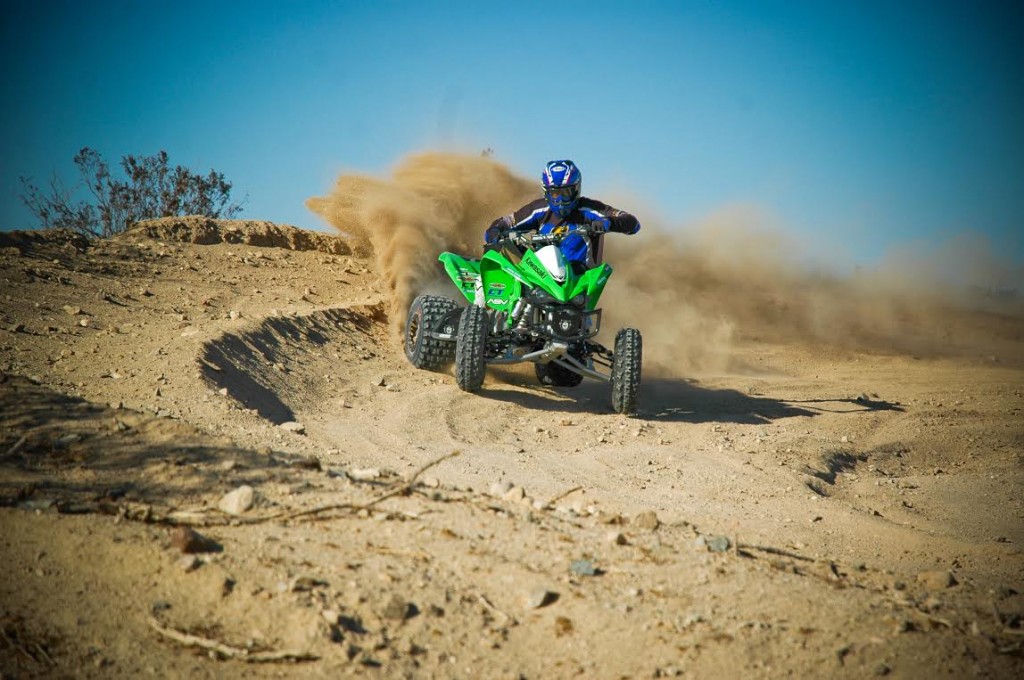

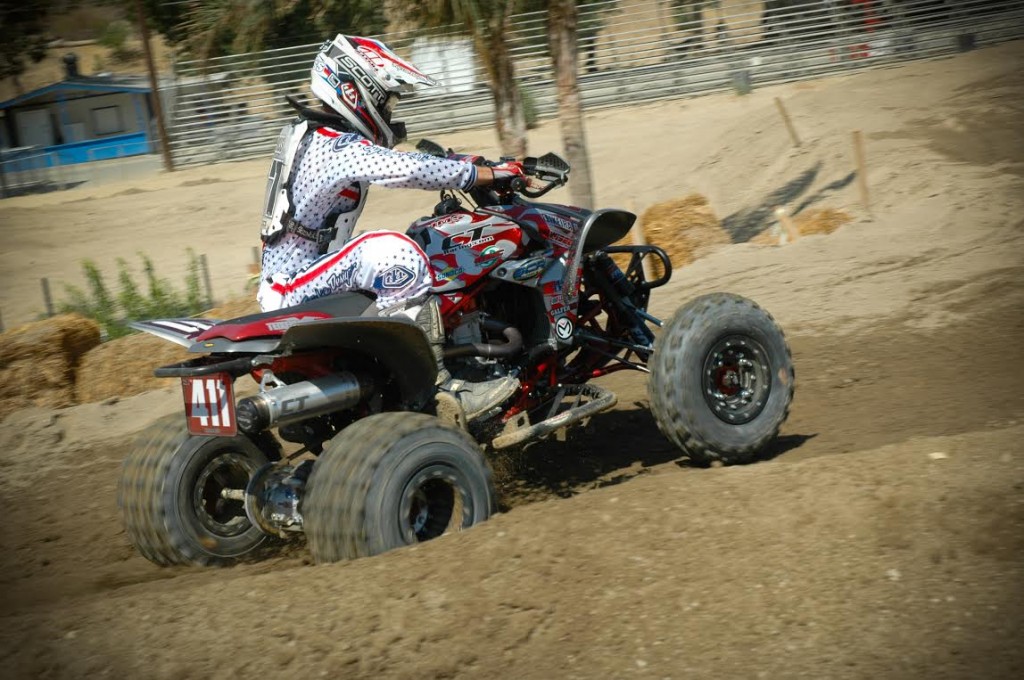
Honda’s TRX450R is one of the most versatile high-performance machines on the market. Out of the box, it’s a great trail machine, and its list of championships proves that it can be modified to win in nearly any form of ATV racing.
Teixeira Tech, out of Tracy, California, allowed us to try out a 450R they built to compete in the WORCS series. Along with showing off a number of trick chassis components produced by Teixeira, this machine demonstrates the capabilities of the TRX450R for endurance, desert, or, with the right tire setup, even motocross racing.
Glen Helen Raceway in San Bernardino, California, provided the perfect testing environment. This facility hosts rounds of the WORCS and Quadcross series, in addition to six- and twelve-hour endurance events.
Watch the Project Test
The Build
CT Racing owner Allen Knowles gave us a rundown of the machine’s modifications and their benefits.
Ed Teixeira is a fast desert racer and a two-time Best in the Desert champion, with his most recent title at the time of this test coming in 2007. He’s also a fabricator, building chassis components for a number of different quads. Knowles had been using Teixeira’s A-arms on his own builds and explained what made the components work well together on this Honda.
Teixeira Tech A-Arms, Rear Linkage, and Steering Stem
Teixeira’s desert-racing background shows in the ground-clearance design of his A-arms. They feature substantial gusseting, but one of Knowles’ favorite features is the caster and camber adjustment at the upper A-arm.
The system makes changing the setup for different tracks straightforward. Loosening the pinch bolt allows the caster setting to be changed. For motocross, Knowles described using a more upright setting of around three to four degrees for quick steering. For high-speed desert riding, the setting can be laid back for greater stability. Camber is also easily adjusted by loosening the hardware and threading the adjustment in or out.
Just as importantly, Knowles liked the fit. After working with plenty of aftermarket products that required extra effort to install, having parts that fit correctly was a reason to keep using Teixeira’s components.
Teixeira also built a rear linkage for the 2006-style TRX450R swingarm. Knowles liked its rising-rate ratio and recommended fitting the later swingarm to 2004–2005 machines to use the linkage. The relationship between the linkage and shock setup was important, and Fox was among the suspension companies Knowles said worked well with Teixeira’s design.
Teixeira’s gusseted chromoly steering stem moves the bars forward. His adjustable handlebar clamp provides three positions: an inch forward, an inch back, or centered. That range allows the rider to put the handlebars where they work best, rather than adapting to a generic position.
Fox Float X Evol Front Shocks and Podium X Rear Shock
Teixeira worked closely with Fox on the suspension setup, using Float X Evol front shocks and a Podium X rear shock. Knowles emphasized the value of choosing a combination that the suspension company and chassis builder have actually tested together. A relationship built around testing and rider feedback gives them a better starting point than simply selling a collection of parts.
The Fox Float shocks allow the spring rate and ride height to be adjusted for different tracks and conditions. Mud racing was Knowles’ example. A machine can pick up 50 or 60 pounds of mud, changing how the suspension works and making it difficult to ride aggressively.
Increasing air pressure allows the spring rate and ground clearance to be brought up to account for the added weight. With a broad adjustment range available, taking the time to set the shocks up properly is a major part of getting the most out of them.
Handlebars, Levers, and Steering Stabilizer
As a WORCS machine, this Honda was set up with endurance racing in mind. Fasst Company Flexx handlebars help take abuse out of the rider’s hands and arms, something Knowles appreciated on his own builds as well.
ASV levers were another component he used himself. Knowles explained that a lever can have plenty of features and still have the wrong leverage ratio, creating a stiff clutch pull that tires the rider out. Quality levers matter when you’re going to be using them for an entire endurance race.
The ASV levers were adjustable for hand size and designed to fold rather than break in a crash. PowerMadd handguards provided protection for off-road racing. Setting up the controls to fit the rider, rather than leaving everything in a generic position, was part of the overall approach to the build. Oury grips completed the handlebar setup.
A Precision Pro steering damper helped control handlebar kickback. Knowles praised its resistance to fading as it heated up during hard riding. He had used a Precision damper while racing GNCC in 2007 and considered a steering damper an essential component for this type of machine.
X-Factor Nerf Bars and Protection
The Honda featured X-Factor nerf bars and aluminum protection. Knowles had used the American-made product line on a number of machines and praised both the material quality and the fit.
The heel-guard mounting arrangement was a particularly useful detail. Frame and subframe movement can put stress into heel guards attached across those points. X-Factor used a separate mounting plate that connected the heel guard to the footpeg rather than picking up the subframe, helping avoid the flex-related breakage Knowles had seen with other designs.
Teixeira’s sprocket guard offered protection without a large swingarm skid plate hanging down and dragging through ruts or mud. The compact stainless-steel skid plate protected the rear of the machine while avoiding the extended design that Knowles said could contribute to swingarm fatigue.
At the time of the test, Teixeira was experimenting with a replaceable sprocket-protection piece. The test piece was aluminum, with different plastics also being considered. The idea was to let that replaceable piece absorb wear or damage and then change it without replacing the entire assembly.
Underneath, an X-Factor belly pan extended forward and tied into the front bumper, leaving no gap between the two pieces of protection.
CT Racing Baja Engine Package
Ed Teixeira had been a CT Racing support rider through his Best in the Desert championships and Baja racing. This Honda continued that relationship with CT’s Baja engine package.
The project was based on a 2005 TRX450R. Like a number of off-road racers, Teixeira chose the 2004–2005 platform for its gearbox durability. Knowles described the engine as an off-the-shelf CT Racing package rather than an exotic, one-off combination.
The package included CT’s five-angle radius valve job and a flow-ported head. CT retained standard-sized valves for off-road racing. Knowles put the engine’s output at 54 horsepower, emphasizing that durability was just as important as speed for this application.
He also felt the Baja package made a good recreational engine: strong performance without building something that constantly needed attention.
Keihin FCR Carburetor, Fuel Customs Intake, and CT Exhaust
The Honda used a 39mm Keihin FCR carburetor, with CT Racing’s adapter kit. The Fuel Customs intake tract made fitting the carburetor straightforward while retaining an airbox. This machine also used the later-style airbox with its larger filter.
Knowles said the FCR carburetor and Fuel Customs intake combination helped the engine make more horsepower. A CT Racing Sonic exhaust completed the intake and exhaust package.
The exhaust’s disc system allowed the sound level to be adjusted to meet WORCS requirements. Knowles said this engine made its best horsepower with 18 discs, but discs could be removed when a quieter setup was needed.
Hinson Clutch and Fluidyne Radiator
A Hinson clutch basket and quick-change clutch cover were fitted for durability. The cover also added a little oil capacity, another useful benefit on an endurance machine.
For cooling, the Honda received an oversized Fluidyne radiator. Knowles explained that a recreational machine could get by with the stock radiator, but an endurance race bike benefited from the extra cooling margin. Mud covering part of the radiator can quickly become a problem during a race, so the larger radiator was intended to help keep engine temperatures under control.
Hardkor Front Hubs
The Honda was equipped with Hardkor billet front hubs. Knowles pointed to the demands of off-road racing, where bearing problems can end a race, as the reason for choosing the upgraded hubs.
GBC X-Rex Tires and HiPer Wheels
Teixeira was sponsored by GBC, and this Honda used six-ply-rated X-Rex tires: 21-inch fronts and 20-inch rears. The tires were selected for the toughness needed in off-road racing.
HiPer wheels were fitted, with double beadlocks at the rear. Knowles explained that the double-beadlock arrangement allowed a rider to keep going hard with a flat tire without as much concern about either bead coming off the wheel.
The tradeoff was additional weight, but finishing races matters when you’re chasing a championship. That made the beadlocks a worthwhile part of Teixeira’s setup.
Graphics, Seat Cover, and Plastic
Teixeira finished the project with custom SCR graphics and a Graves Motorsports seat cover. The seat’s bright, bass-boat-red finish fit the Honda’s custom appearance.
The graphics and seat were matched to Maier plastic. Maier offered a range of colors and both race-cut and full-fender configurations, allowing the builder to tailor the machine’s appearance and coverage to its intended use.
The Test
This Honda is littered with Teixeira’s beautifully crafted chassis components, resulting in a vastly superior-handling ATV compared to the high-centered, narrower stance of the stock 450R. Teixeira’s Honda stayed much flatter in the turns. It also remained stable and predictable on whooped-out, high-speed straights with gnarly braking bumps.
Thanks to Fox Racing shocks, this Honda eats up jump landings while remaining quite supple through rough chop. All the while, the rider is sheltered from jolts to the handlebars thanks to a Precision Racing steering stabilizer.
The CT Racing-modified engine is fast, effective, and easy to ride. The power comes on strong in the lower midrange and pulls hard into the top end. Bogging down in deep sand corners was never an issue, even with desert-sized, six-ply GBC tires installed.
Conclusion
While top-end power is good, this machine simply doesn’t need to be wrung out to go fast, making it more reliable and easier to race hard for a prolonged period of time.
Along with the major chassis, suspension, and engine modifications, there are quite a few other components in place, adding to the overall refinement and effectiveness of this over-the-top Honda.