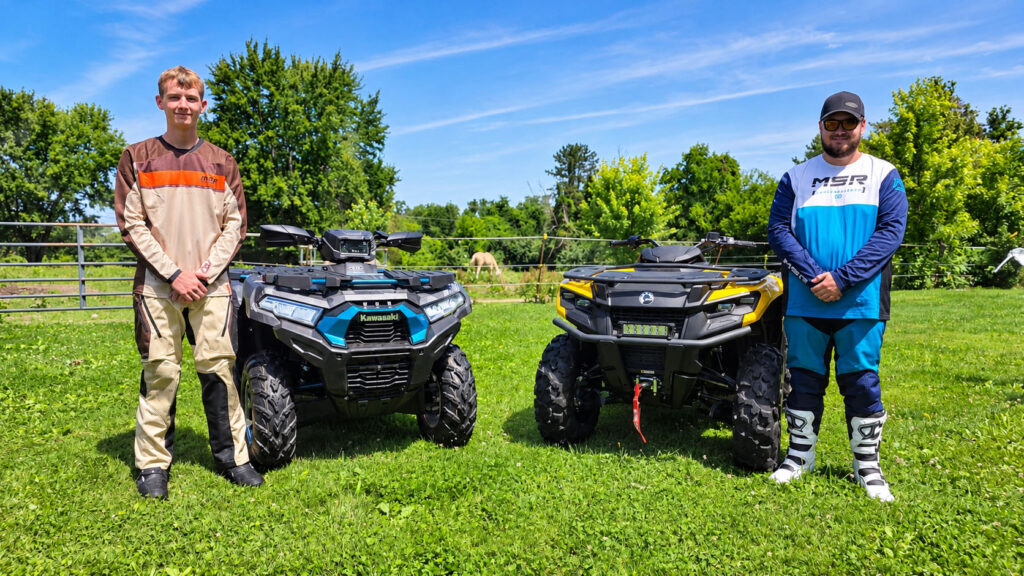
ATV On Demand recently ran our 700cc 4×4 shootout, which ultimately led to this Brute Force vs Outlander comparison. Despite it being clearly labeled as a single-cylinder test and multiple people trying to explain it to them, a bunch of Brute Force 750 owners still flooded the comments on YouTube and social media complaining that we didn’t include their bike. They kept pointing to its similar horsepower, displacement and price point, refusing to accept it didn’t belong in the class.
Their for, based on their very outspoken feelings we decided to give them what they wanted. We’re putting the Kawasaki Brute Force 750 up against the shootout-winning Can-Am Outlander 700. Now we’ll see if the Brute Force’s highly-regarded V-twin can beat the single-cylinder champ.
Test Riders & Location
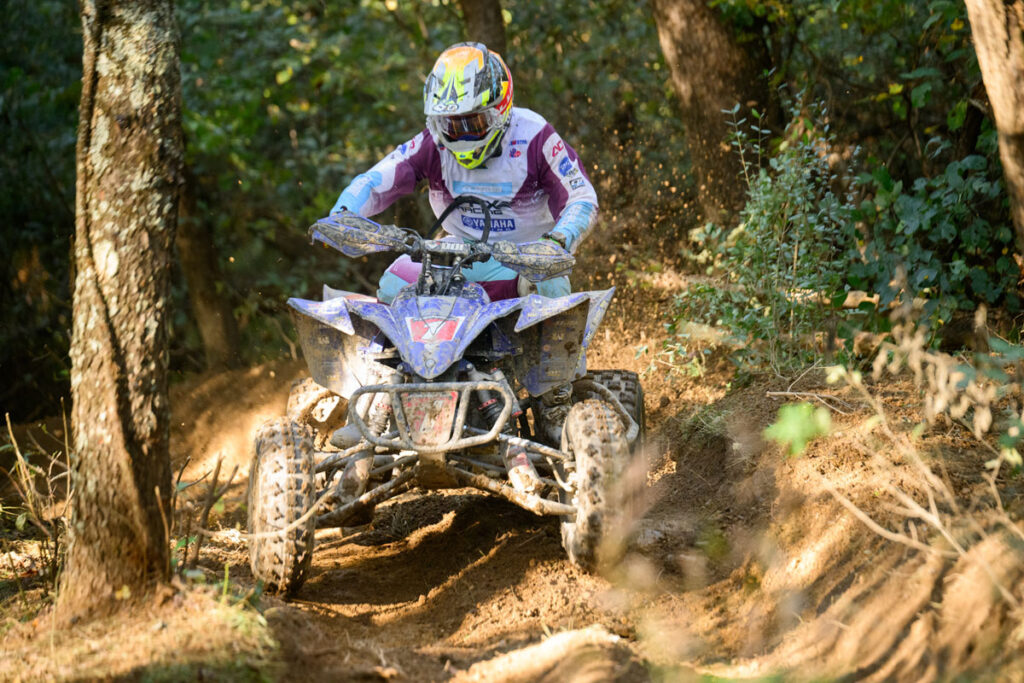
We tested both machines on a hilly two-mile cross-country style loop in Wilmington, Ohio. The loop featured a good amount of elevation change along with tight, twisty sections and high-speed straights, making it well-suited to testing all aspects of performance.
Landon Dean, a 4×4 cross-country racer, and Jimmy Green, whose family owns the property, did the riding. Both were wearing MSR gear, with Jimmy in the new Legend Off-Road jersey, pants, and gloves. We especially like the over-the-boot pants for protecting the machine and helping keep your feet drier. We’ve been impressed with how well the MSR stuff is holding up and the price is right. Check the link below to shop the full line of MSR gear.
Shop Our Riders’ Gear
| Riding Gear | Shop Here |
|---|---|
| MSR | https://www.rockymountainatvmc.com/msr?ref=1102 |
Affiliate Disclosure: ATV On Demand may earn a commission on qualifying purchases made through the link above. These affiliate partnerships help support our testing and editorial content.

Brute Force vs Outlander Technical Comparison
The Kawasaki Brute Force 750 has been a staple in the sport-utility class since 2005, and we’ve always been impressed with its smooth, powerful 749cc V-twin. The Can-Am Outlander 700 is a much newer platform, having arrived in 2023.
On paper, the two machines are surprisingly close in horsepower, with the Brute Force making 49.6 hp and the Outlander rated at 50 hp. However, the scale tells a much different story. The Outlander 700 XT is the heavier machine in this comparison. equipped with a winch, bumpers, and additional accessories. It has a claimed dry weight of 858 pounds compared to the Brute Force’s 732.1 pound curb weight. Even before adding fuel and fluids, the Outlander is significantly heavier. This gives the Brute Force a clear power-to-weight advantage — 0.068 hp per pound versus the Outlander’s 0.058 hp per pound.
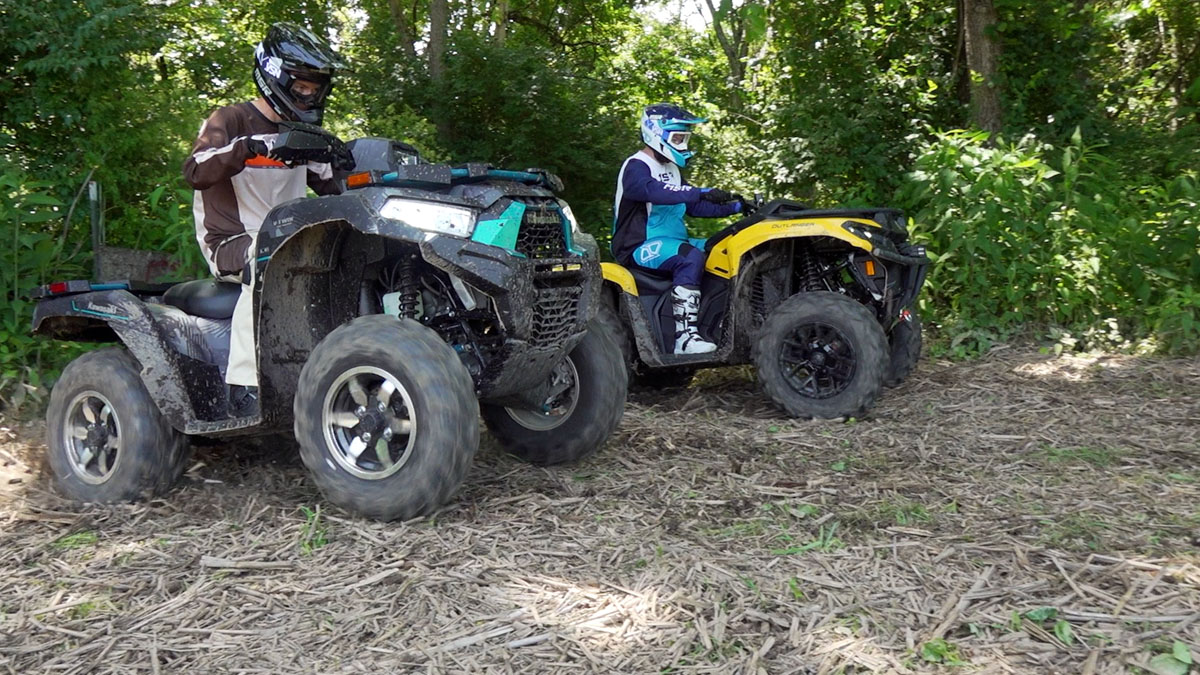
The Brute Force 750 measures 46.1 inches wide with a 50.6-inch wheelbase, while the Outlander 700 is noticeably larger at 48.8 inches wide with a 53-inch wheelbase. Ground clearance is higher on the Outlander, 12.5 inches versus 9.6 inches on the Kawasaki.
Both machines use double A-arm suspension with five-position preload adjustable shocks. The Brute Force has 6.9 inches of travel up front and 7.4 inches in back, The Outlander offers more travel at 9.75 inches front and 10.25 inches rear. Both are equipped with a rear sway bar.
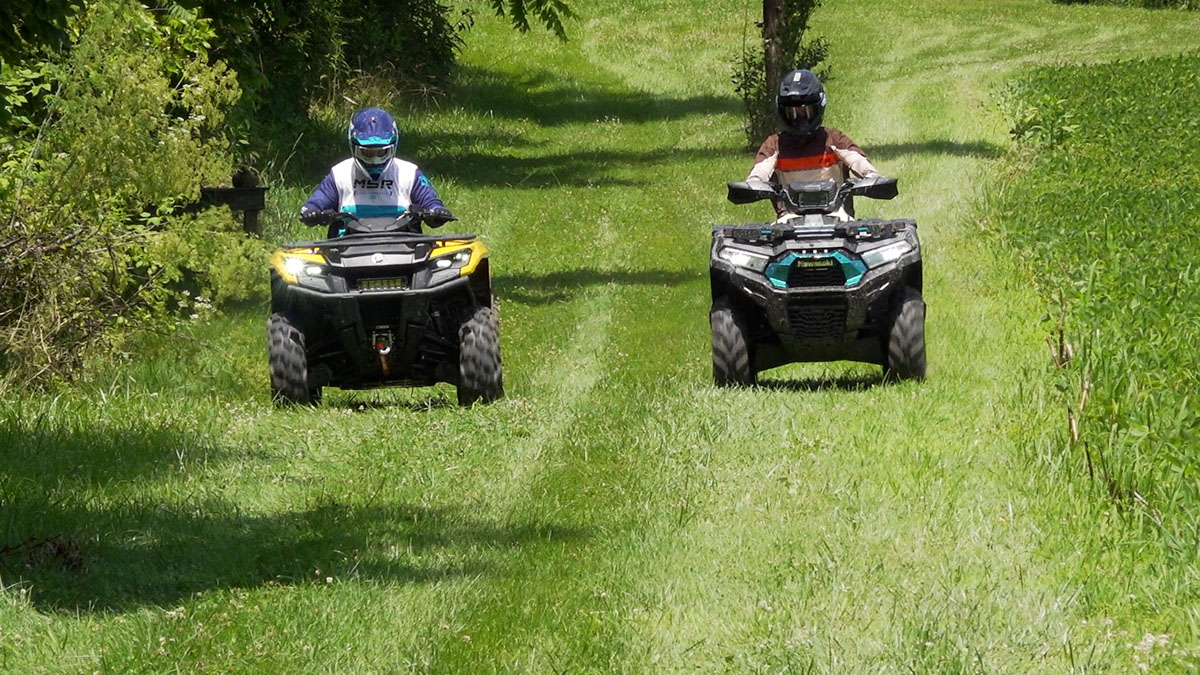
Both machines have electronic power steering. The Kawasaki uses a single-mode system, while the Outlander features Tri-Mode Dynamic Power Steering with three selectable settings.
Both machines use hydraulic disc brakes. The Kawasaki features dual 176mm rotors with dual-piston calipers up front and a sealed oil-bathed multi-disc rear brake, with separate front and rear hand levers and a rear foot pedal. The Outlander uses larger 214mm rotors all around with twin-piston calipers. It has single-lever, hand actuated braking plus a separate rear foot pedal.
Both machines run a staggered tire setup on cast aluminum wheels. The Kawasaki uses 25-inch CST tires, while the Can-Am comes with larger 26-inch XPS Trail Force tires. Both are designed for general trail use.
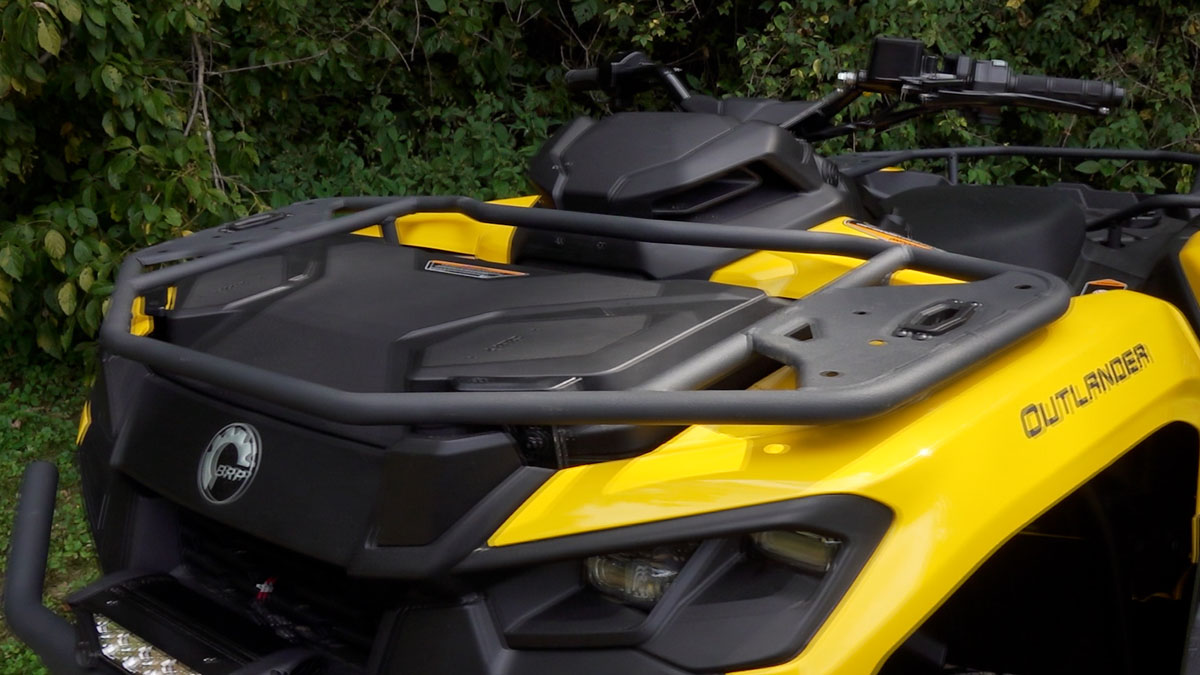
Utility specs include 360 pounds of combined rack capacity, 10 gallons of onboard storage, and a 2-inch hitch receiver rated to tow up to 1,830 pounds.
The Kawasaki Brute Force 750 has a rack capacity of 88 lbs up front and 176 lbs in the rear using steel racks with plastic covers. The Can-Am Outlander 700 offers significantly higher capacity with 120 lbs front and 240 lbs rear using steel perimeter racks.
Storage: The Kawasaki Brute Force 750 has a small covered storage box on the front rack, a weather-sealed box on the left front fender, and a mesh pocket on the right front fender. The Outlander 700 offers much more storage with a large 9-gallon front box and a 1-gallon compartment between the rider’s knees with a USB port. .
For towing, the Brute Force 750 is rated for 1,250 pounds with a ball mount, while the Outlander 700 is rated for 1,830 pounds with a 2-inch receiver.
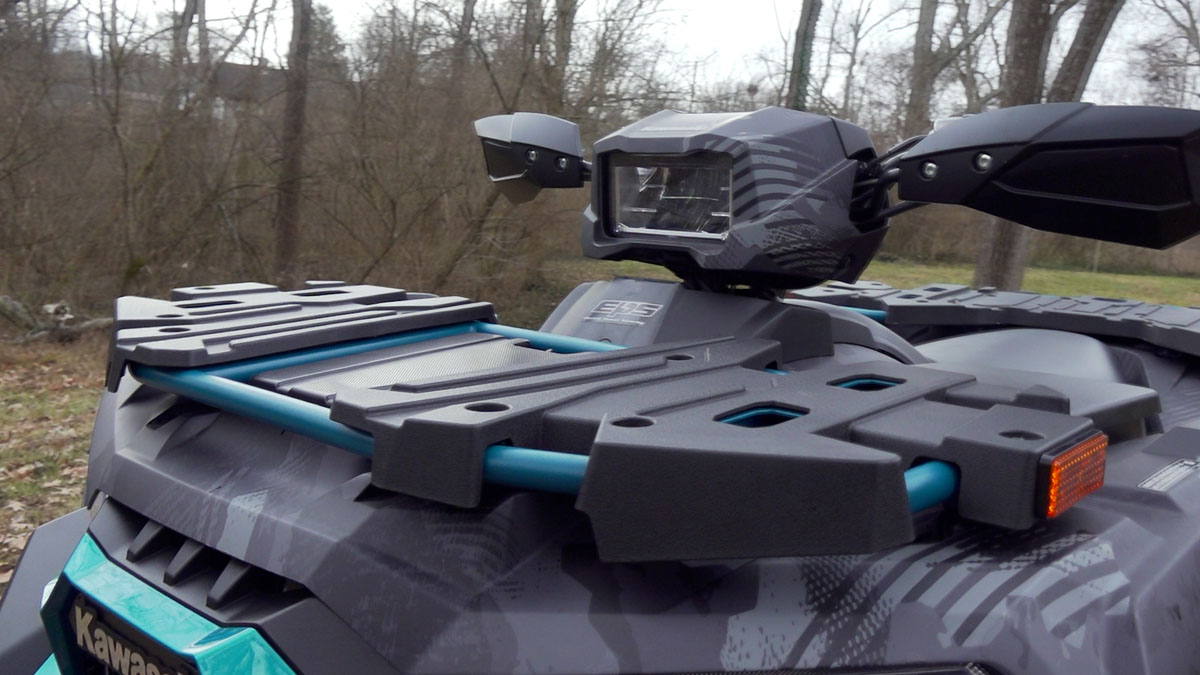
Both machines have full LED lighting and clear displays. We prefer the Kawasaki’s full-color display, but we like that the Outlander’s screen is mounted in front of the bars for easier aftermarket handlebar setups.
2024 Can-Am Outlander XT 700 vs. 2024 Kawasaki Brute Force 750 LE EPS Specifications
| Specification | Can-Am Outlander XT 700 | Kawasaki Brute Force 750 EPS |
|---|---|---|
| ENGINE | ||
| Engine Type | Rotax ACE, single-cylinder, liquid-cooled | 4-stroke V-twin, liquid-cooled |
| Displacement | 650cc | 749cc |
| Valve Train | DOHC | SOHC |
| Horsepower | 50 hp | 49.6 hp |
| Maximum Torque | 41 lb-ft | 42.7 lb-ft @ 4,750 rpm |
| Bore x Stroke | Not listed in Can-Am spec sheet | 85.0 x 66.0 mm |
| Compression Ratio | Not listed in Can-Am spec sheet | 9.3:1 |
| Fuel Delivery | EFI, 46-millimeter throttle body with intelligent throttle control. | DFI with two 34 mm throttle bodies |
| Starting System | Electric | Electric |
| TRANSMISSION / DRIVETRAIN | ||
| Transmission | pDrive primary CVT; L/H/N/R/P | Automatic CVT; H/L/N/R |
| Final Drive | Shaft-driven selectable 2WD/4WD | Shaft-driven selectable 2WD/4WD |
| Front Differential | Visco-Lok QE auto-locking front differential | Variable-control front differential lock |
| Engine Braking | 3 Mode Intelligent Engine Braking | Single-Mode |
| STEERING | ||
| Power Steering | Tri-Mode Dynamic Power Steering (DPS) | Electric Power Steering (EPS) |
| SUSPENSION | ||
| Front Suspension | Double A-arm | Double A-arm |
| Front Shock Adjustment | 5-Way Spring Preload | 5-Way Spring Preload |
| Front Wheel Travel | 9.75 in. | 6.9 in. |
| Rear Suspension | Double A-arm | Double A-arm |
| Rear Shock Adjustment | 5-Way Spring Preload | 5-Way Spring Preload |
| Rear Wheel Travel | 10.25 in. | 7.4 in. |
| BRAKES | ||
| Front Brakes | Dual 214 mm discs with hydraulic twin-piston calipers | Dual hydraulic 176 millimeter disc with twin piston calipers. |
| Rear Brake | Single 214 mm disc with hydraulic twin-piston caliper | Sealed oil-bathed multi-disc with independent parking brake |
| TIRES / WHEELS | ||
| Front Tires | XPS Trail Force 26 x 8 x 14 | CST 25×8-12 |
| Rear Tires | XPS Trail Force 26 x 10 x 14 | CST 25×10-12 |
| Wheels | 14-in. aluminum | 12-in. wheels |
| DIMENSIONS | ||
| Overall Length | 89.9 in. | 86.0 in. |
| Overall Width | 48.8 in. | 46.1 in. |
| Overall Height | 48.2 in. | 47.6 in. |
| Wheelbase | 53.0 in. | 50.6 in. |
| Seat Height | 38.6 in. | 35.2 in. |
| Ground Clearance | 12.5 in. | 9.0 in. |
| Dry Weight | 858 lb | 685.8 |
| CAPACITIES / UTILITY | ||
| Fuel Capacity | 5.1 gal | 5.0 gal |
| Front Rack Capacity | 120 lb | 88 lb |
| Rear Rack Capacity | 240 lb | 176 lb |
| Total Rack Capacity | 360 lb | 264.5 lb |
| Storage Capacity | 10 gal total | Not specified by Kawasaki |
| Towing Capacity | 1,830 lb | 1,250 lb |
| Hitch | 2 in. hitch receiver | Ball hitch mount |
| EQUIPMENT / FEATURES | ||
| Lighting | Full LED lighting | Full LED lighting |
| Instrument Display | 4.5-in. digital display | Full-color TFT display |
| Smartphone Connectivity | No | Rideology, smartphone connectivity |
| USB Charging | USB phone charger | Not listed |
| COLOR / PRICE | ||
| 2027 MSRP | $10,599 | $11,499 |
Shootout Format
Because these two machines aren’t in the same class, we’re not using our formal scoring system. This is an experience-based head-to-head.
We’ll start with back-to-back riding on our demanding two-mile cross-country loop to see how they feel in real conditions. Then we’ll test them as utility machines, followed by drag racing. Finally, we’ll run timed laps on the cross-countryi loop because that’s really where these machines show what they’re made of when it comes to making time on the trail. At the end, each rider will give you their final pick.
| Test | What We’re Evaluating |
|---|---|
| Trail Performance | Engine response, drivetrain, handling, suspension, braking, ergonomics |
| Utility Testing | Performance and stability with a 250-lb rack load |
| Drag Racing | Straight-line acceleration |
| Timed Cross-Country Race | Overall speed around the XC test loop |
| Final Rider Pick | Each rider’s overall machine preference |
Trail Performance
Engine & Drivetrain
On the trail, the Kawasaki Brute Force 750’s V-twin is noticeably snappier and pulls harder at all RPMs than the Outlander 700, especially right off the bottom. The Outlander 700 is the fastest-revving single in its class and has impressive throttle response, but it still lacks the immediate snap of the Kawasaki.
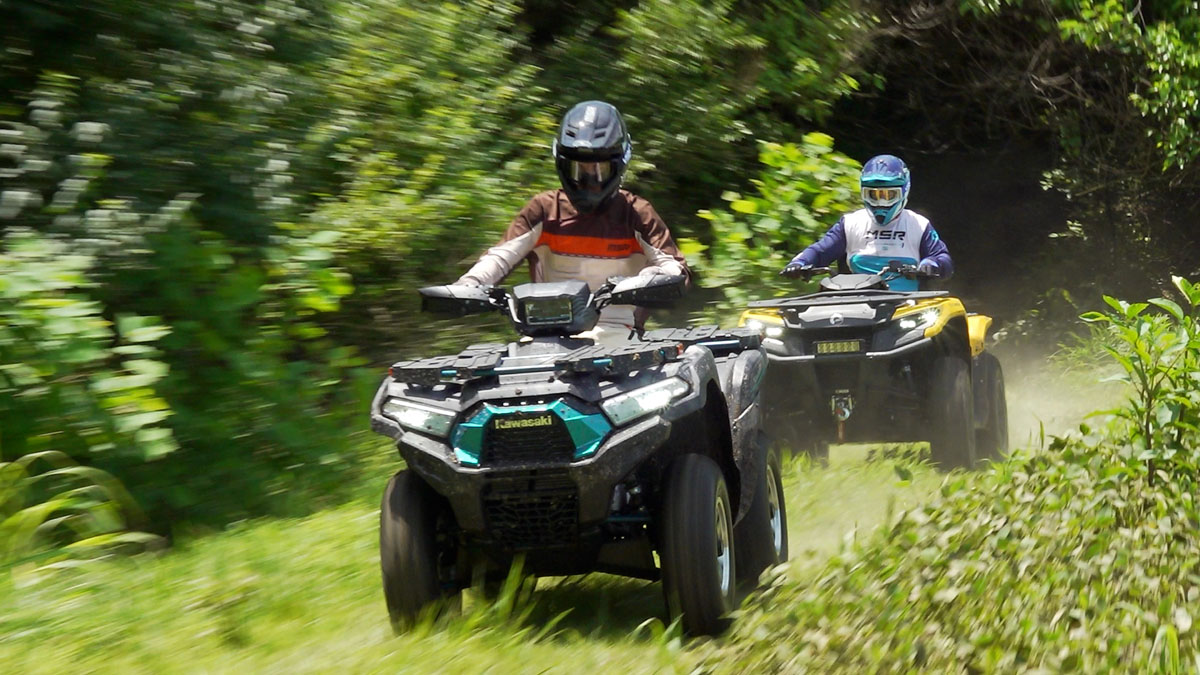
Both riders had fun sliding the machines around in two-wheel drive, but four-wheel drive was the preferred setting for speed on the trail. Both the Kawasaki’s limited-slip and Can-Am’s Visco-Lok front differentials performed well, giving predictable traction in corners. The Kawasaki is the only one that offers the ability to fully lock the front differential on demand.
Chassis, Suspension & Handling
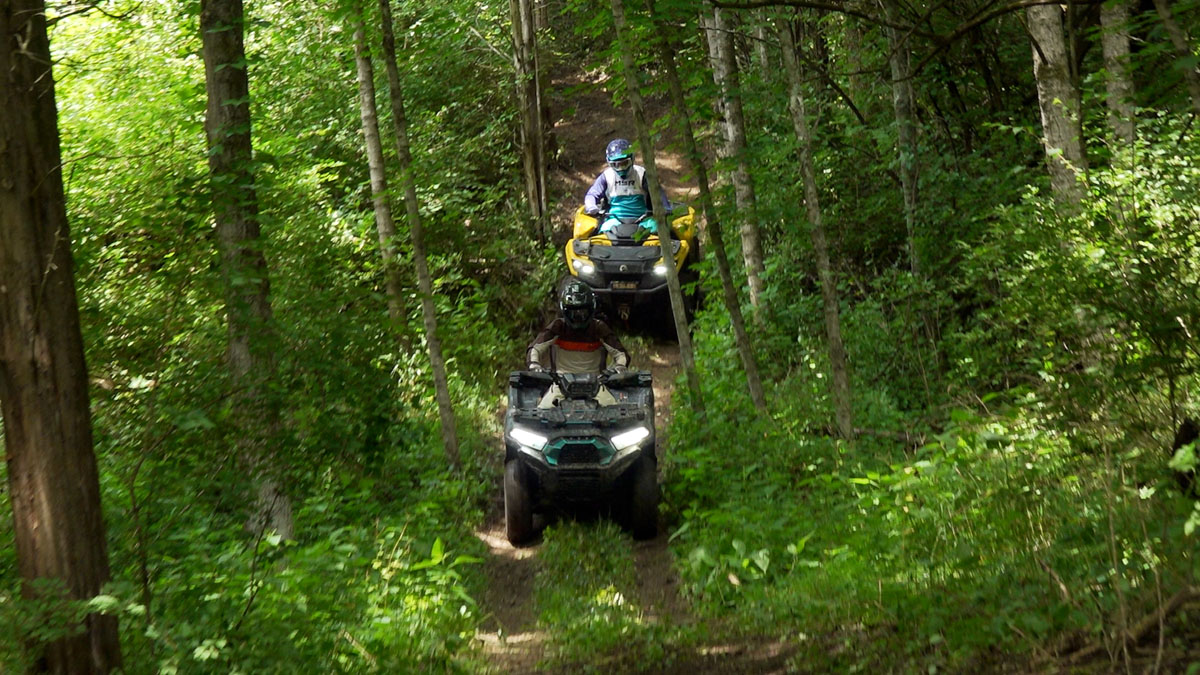
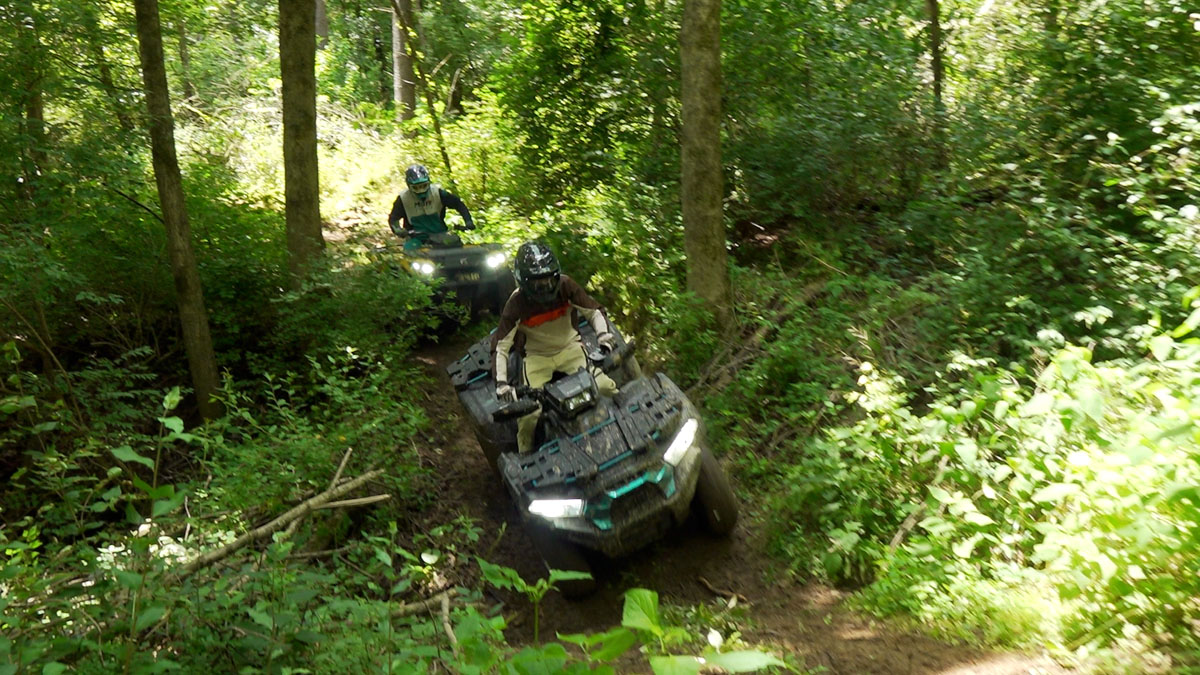
One of the first off-camber downhills exposed the Kawasaki’s front-end dive, with Landon winding up on two wheels. The same section was no problem on the Outlander. The Brute Force has a lot more body roll. You quickly learn to slow down more for corners, be more cautious on off-cambers, and use extra body English to keep it planted. The Kawasaki’s lighter weight and snappy V-twin make it feel more agile, especially when hopping logs or getting airborne — it’s playful and willing to pop off anything you point it at.
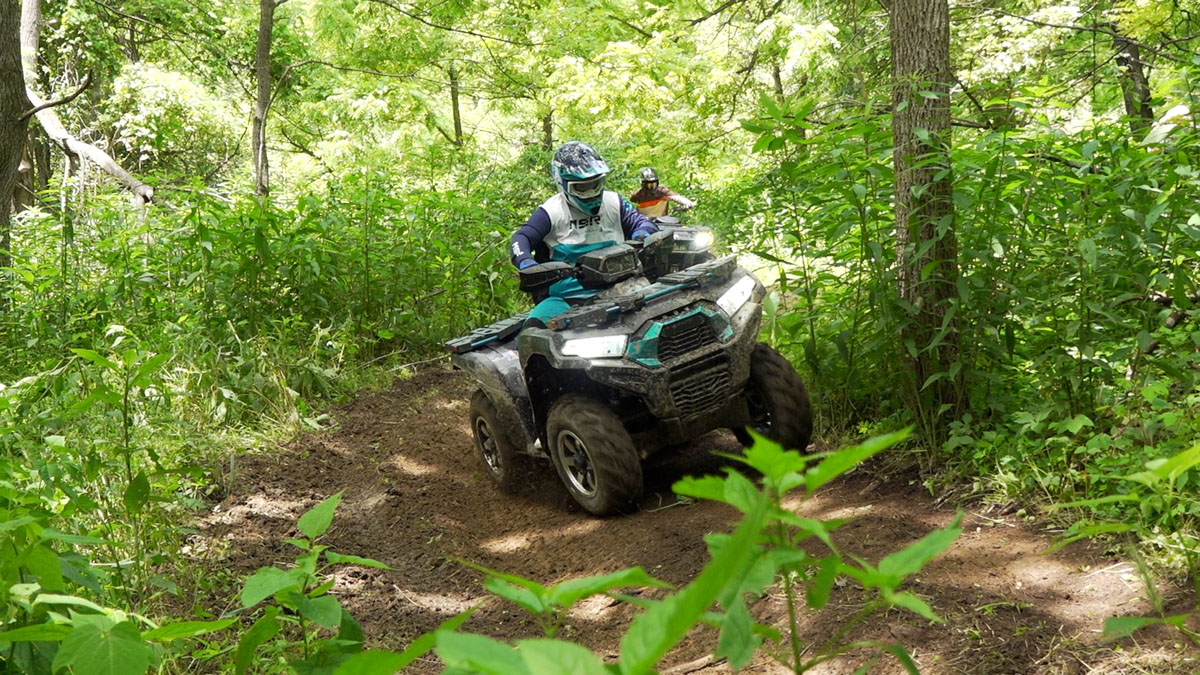
The Outlander, on the other hand, prefers to stay planted. It hugs the ground, absorbs the trail, and just makes time like a trophy truck. Of-course you can jump it and it does it well it just pop off things as easily, whether that’s good or bad. The Outlander has a much more stable chassis. Its wider stance and superior suspension let you carry more speed through corners, brake less, and get back on the gas sooner.
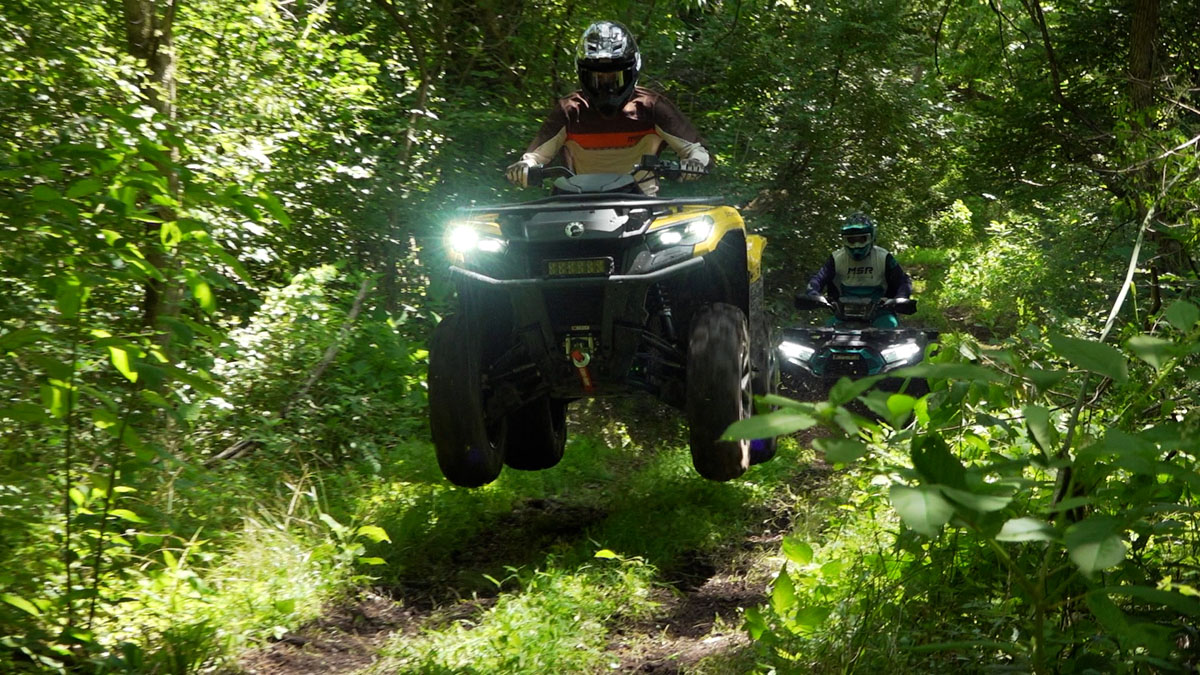
The Outlander’s Tri-Mode power steering is clearly better, offering a superior combination of light effort and bump filtration. In terms of suspension, both machines offer decent bottoming resistance, but the Outlander is plusher off the top of the stroke thanks to its extra travel. This makes it better at absorbing roots and rocks, and its suspension feels more fluid overall.
Braking
In 2WD, both riders preferred the Kawasaki’s braking thanks to its separate front and rear brakes and lighter weight. Once switched to four-wheel drive, the Outlander’s single-lever braking felt more effective. The Kawasaki has excellent front brake feel and power, while the rear brake feels a bit vague and spongy. The Outlander’s single-lever braking offers good feel and modulation.
Ergonomics
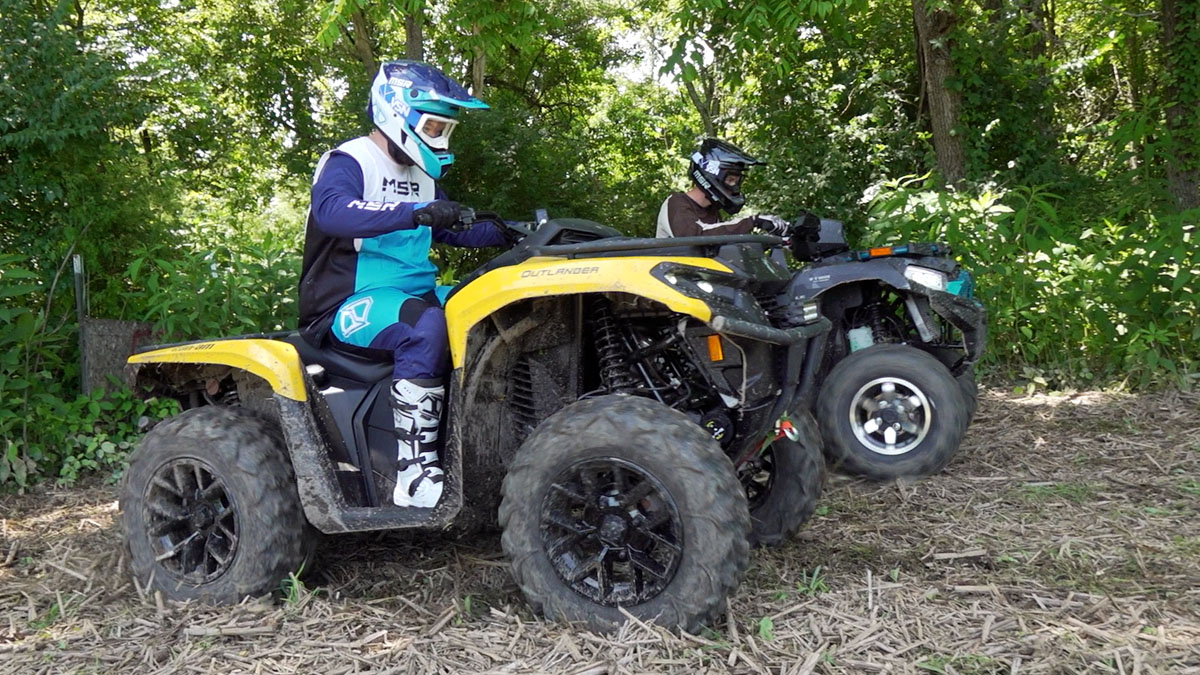
The Outlander 700 has the edge in ergonomics. Its slim, smooth midsection, low handlebars, and taller, more aggressive plastic foot pegs make it easier to move around on and shift your weight. The Brute Force 750 is still comfortable with a longer seat, but taller riders are more likely to bump their knees on the front fenders, especially when riding aggressively. We prefer steel foot pegs but they’re lower and less aggressive than the Outlander’s.
Overall Trail Impression
Overall, both riders felt the Outlander 700 had unquestionably superior handling and suspension. But the Kawasaki’s faster, snappier engine kept the outcome of which machine was actually faster very much in question.
Utility Testing
Both machines were relatively easy to strap the sandbags to, thanks to ample steel tie-down points. We strapped 100 pounds on the front rack and 150 pounds on the rear, then ran the same demanding two-mile loop.
Both machines handled the 250-pound load well. The Kawasaki’s V-twin felt noticeably less affected by the weight, but the Outlander’s engine was still more than adequate. Both could bottom out the suspension if pushed hard, but the Outlander felt noticeably more stable and comfortable, especially on off-camber sections. The riders also preferred the Outlander’s braking when loaded. In the end, both riders agreed that if they were choosing one strictly as a work vehicle, they’d pick the Can-Am.
Brute Force vs Outlander Drag Racing
To test straight line acceleration, we ran a roughly 125-yard drag race on a slight uphill that started on loose dirt and transitioned into grass. We regularly switched riders and sides of the track to keep things fair. 4wd was used for all runs.
The Brute Force 750 typically won most of the races by at least a couple of bike lengths. Even when the Outlander got the jump off the line, the Kawasaki could usually run it down. The Outlander only managed to win a couple times, which both riders attributed mostly to rider error. In the end, both riders agreed that the Brute Force was clearly the faster machine in a straight line.
Timed Cross Country Race
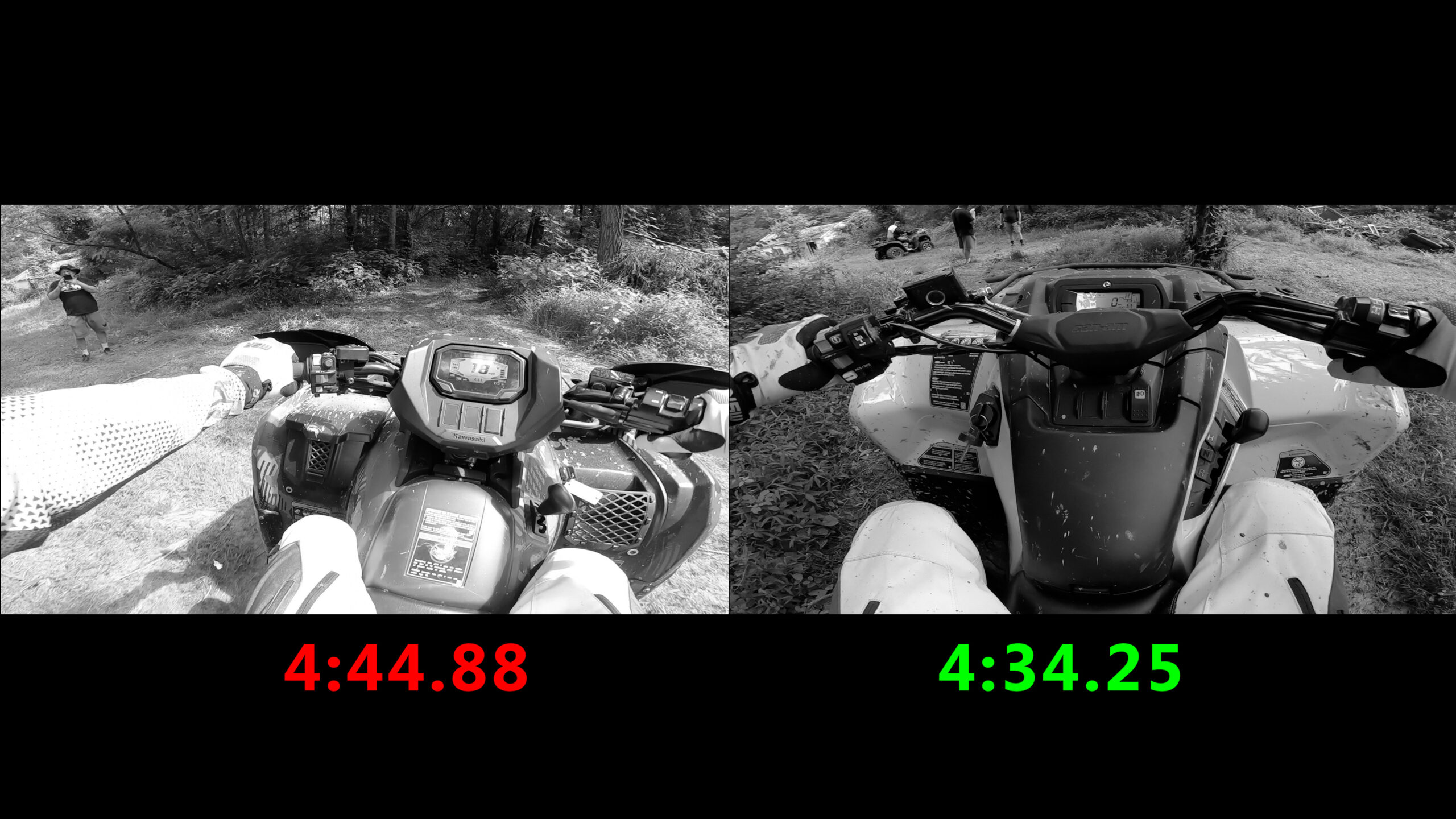
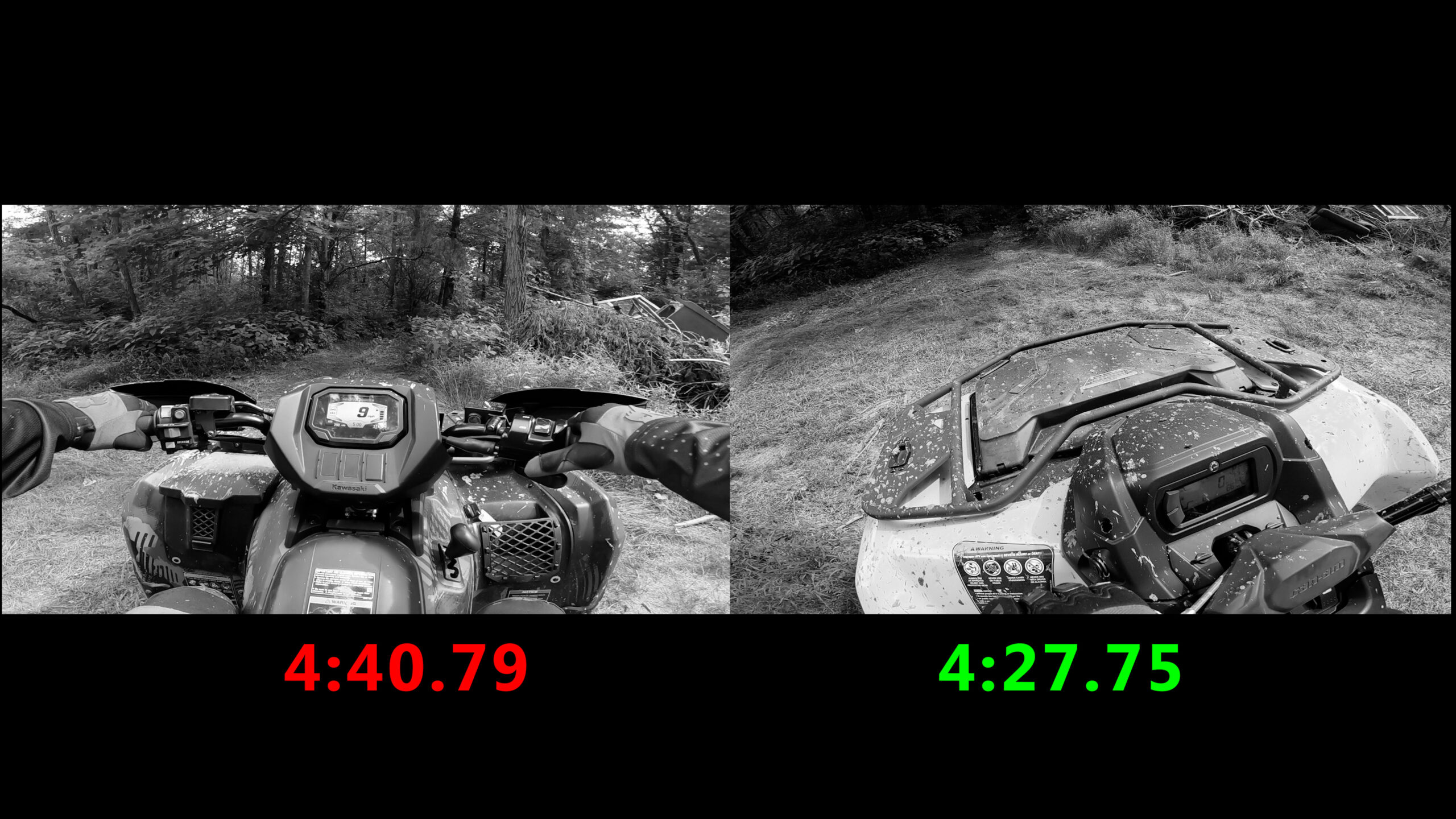
Both riders completed two-lap runs around our cross-country loop from a dead stop in four-wheel drive, as is the norm in cross-country racing. Each rider was timed on both machines. Jimmy turned a 4:44.88 time on the Brute Force and a 4:34.25 time on the Outlander — a 10.63 second win for the Can-Am. Landon put in a 4:40.79 run on the Brute Force compared to a 4:27.75 time on the Outlander — a 13.04 second win for the single-cylinder Can-Am. Before seeing the lap times, both riders said the Kawasaki felt faster, particularly the engine. However, they also felt the Outlander was the easier machine to go fast on thanks to its superior handling, suspension, and four-wheel drive braking. After seeing the times, both agreed the Outlander was clearly the quicker machine around our loop. They pointed to the Outlander’s planted chassis, reduced body roll, and ability to carry significantly more speed through corners as the main reasons for the gap. Both referenced Wyatt Wilkin’s favorite saying — smooth is fast — and felt the Outlander embodied that better.
Conclusion
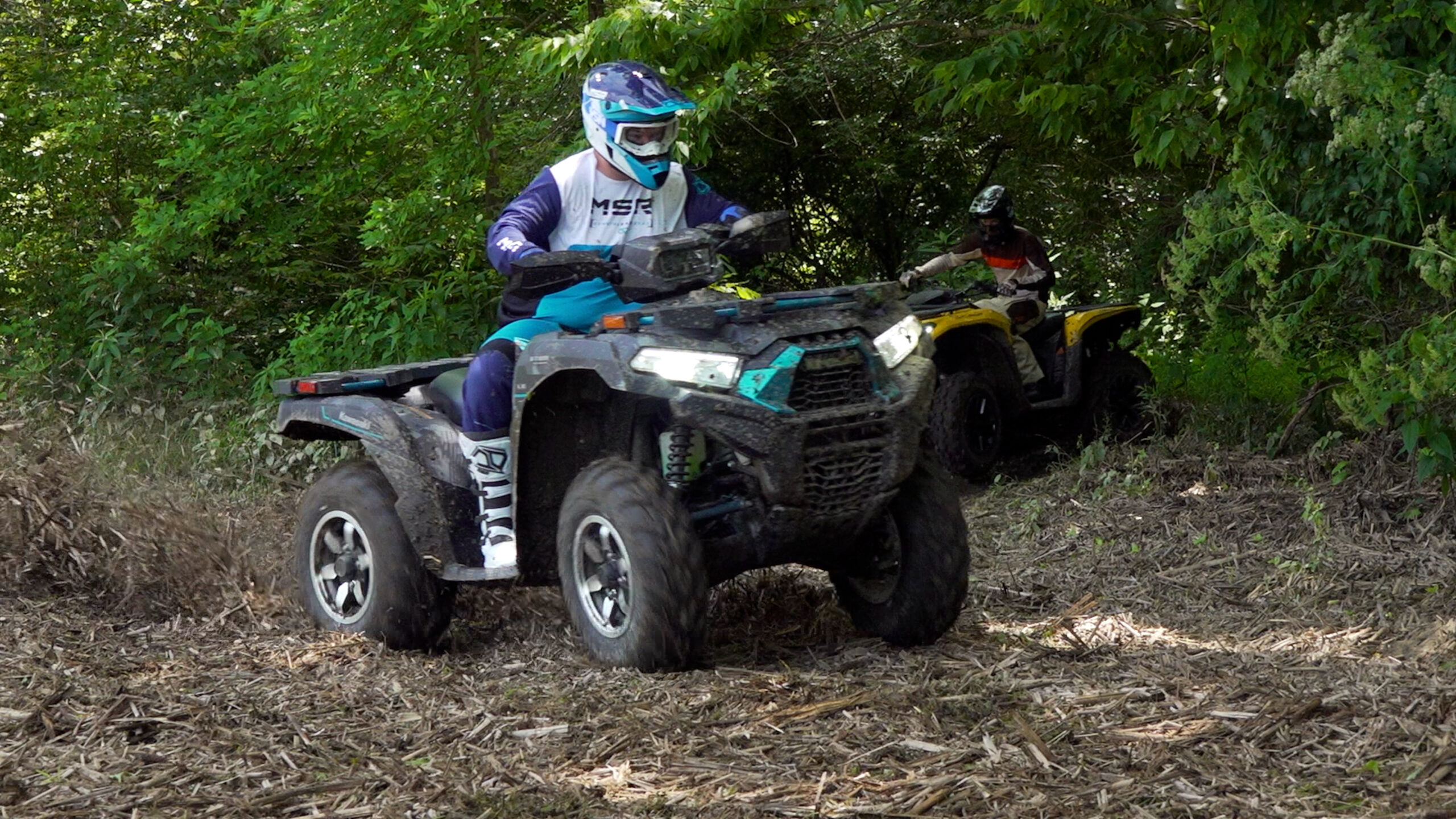
Well, for the very vocal Brute Force guys and the honestly curious… here we are. This matchup went exactly the way we thought it would. The Brute Force 750 showed up with that fast-revving V-twin and did exactly what it was supposed to do — it was faster in a relatively smooth straight line and clearly won the drag races. We never had any doubts about that. But let’s be real… many severely underestimated the single-cylinder champion.
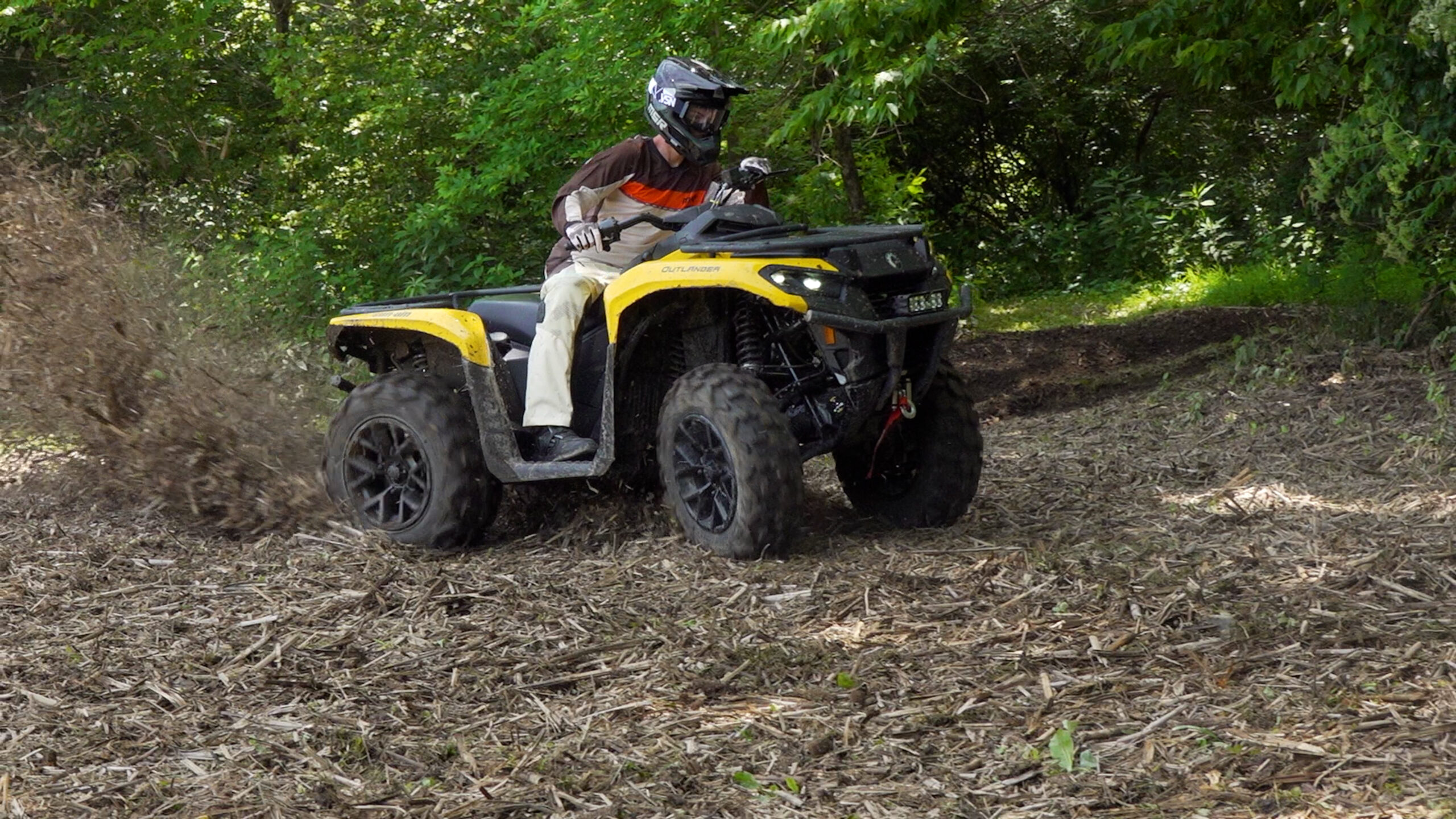
The Outlander 700 took it to the Brute Force on our cross-country loop. It dominated in handling, suspension, stability, and lap times. When we loaded both machines down for work, the Outlander was our rider’s choice. This shootout proved one thing: a V-twin engine is nice, but modern chassis dimensions and superior suspension matter more than most of you motor guys want to admit.
That V-twin in the Brute Force is an insanely good engine. If Kawasaki ever put that powerplant in a modern chassis, they’d have an absolute weapon. Until that happens, both of our test riders agree — the single-cylinder Outlander 700 is simply the better performing machine.
Manufacturer Links
Kawasaki Brute Force 750 EPS
Kawasaki Brute Force 750 official page
Can-Am Outlander 700
Can-Am Outlander 500/700 official page