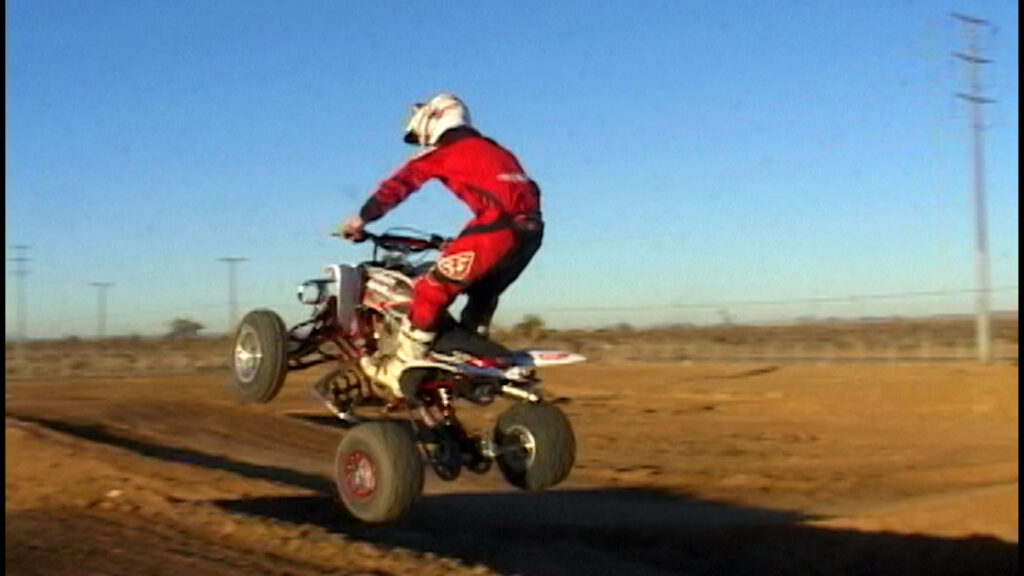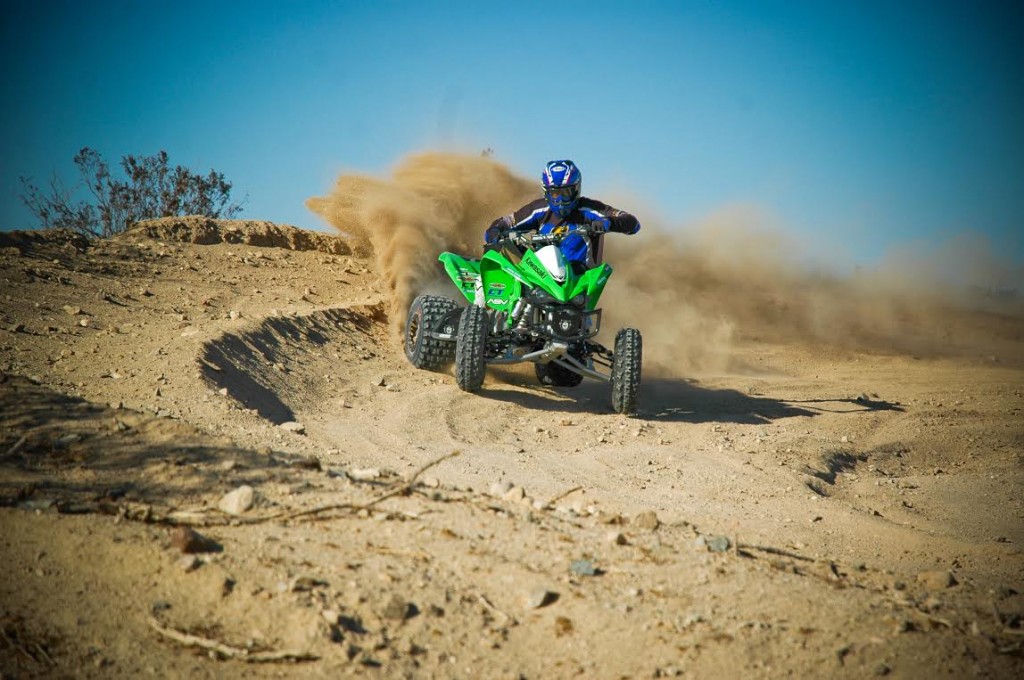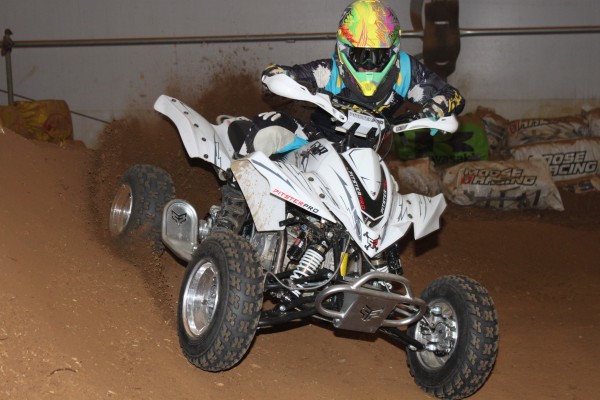

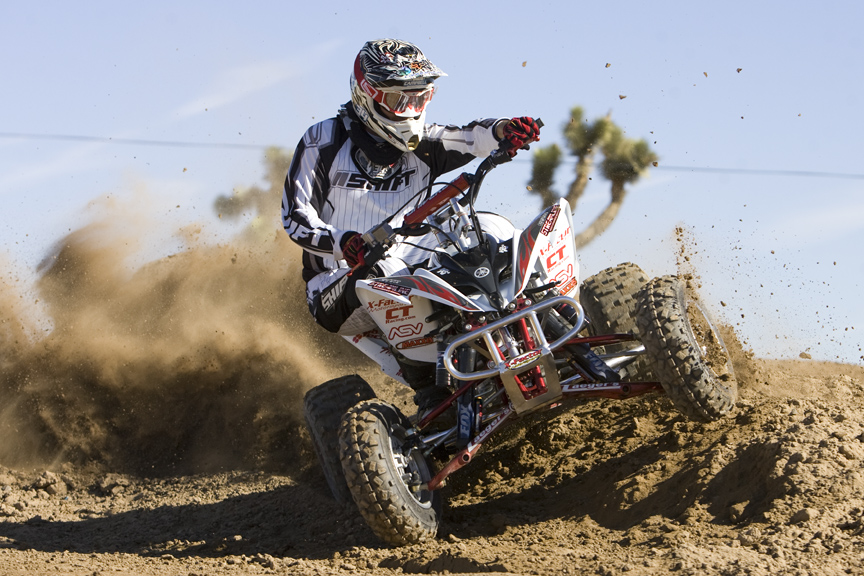
ATV models as significant as the Raptor 250 only come around every six or eight years. There is perhaps no other sport ATV on the market that appeals to so many types of riders — it provides a great learning platform for some and the ultimate race machine for others.
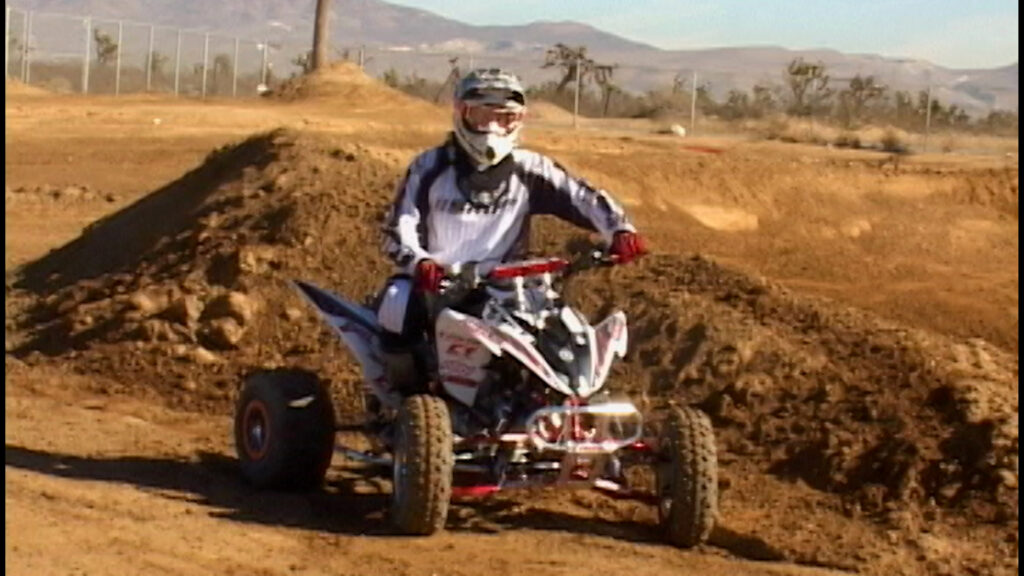
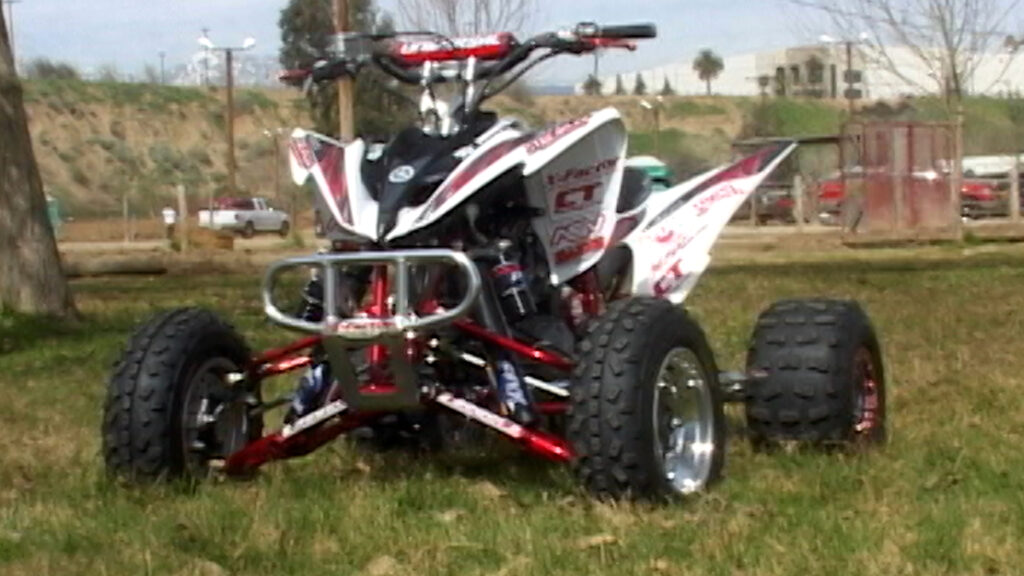
CT Racing’s Raptor 250, featured in the September 2009 issue of Dirt Wheels magazine, is perhaps the ultimate Raptor 250 for the track. The culmination of light, high-tech aftermarket components pushed the CT Raptor 250 to the edge of the envelope when it comes to available performance. Starting with the lightest full-size sport ATV on the market, weight was considered as each aftermarket component was added, resulting in one of the most nimble ATVs ever to hit the track. Additionally, CT Racing was able to extract more horsepower than we ever imagined from Yamaha’s simple air-cooled, two-valve four-stroke engine. In whoops and on tight corners, this lightweight fighter was actually able to make time on 450s.
We caught up with Allen Knowles of CT Racing at Milestone Motocross Park, where he’d brought the bike for a shakedown. Knowles walked us through the build, starting with the philosophy behind it. “The theme of this bike was to keep it light,” he said. “So everything that we could do, we kept on the light side.”
Chassis and Suspension
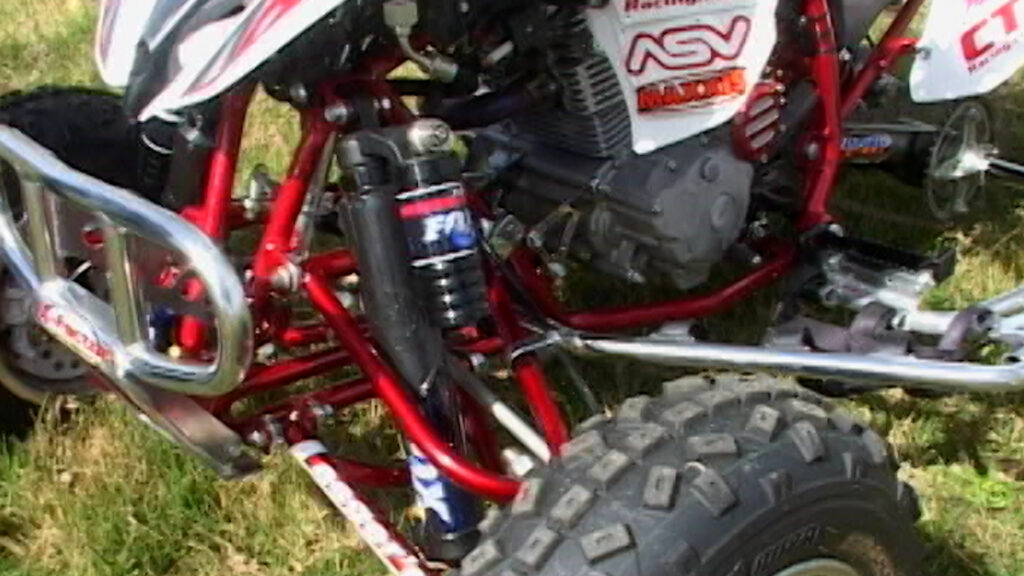
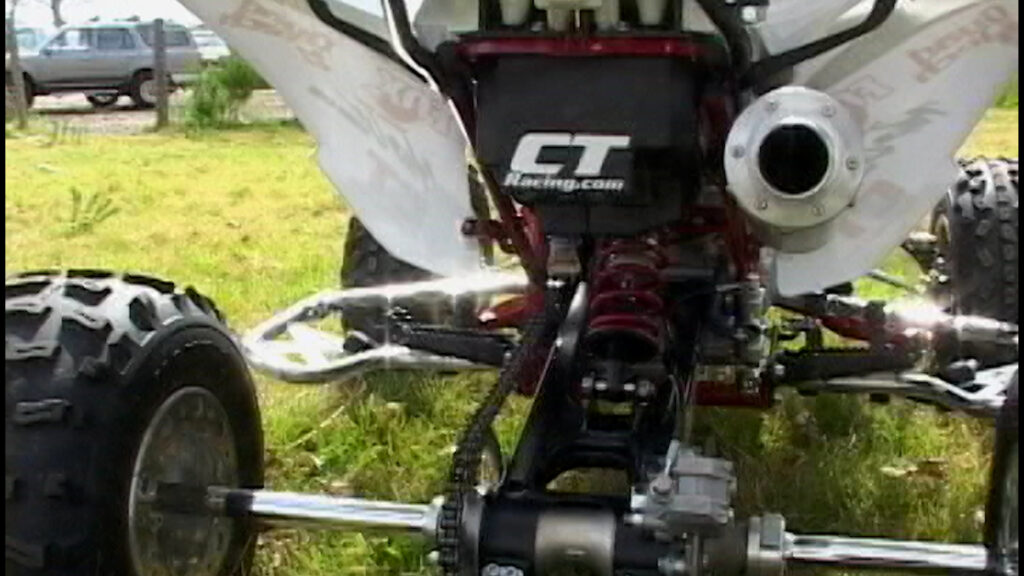
We started off with the suspension, Knowles said. We went with the Fox Float air shocks. They’re light — they’re as light a shock as you’re going to get. They’re arguably the best shock you can buy, and they work extremely well on this bike. According to Knowles, Romain Couprie — the European and French quadcross champion at the time — had never ridden Fox shocks before. He couldn’t believe how flat the thing stayed in the corners. He’d assumed air shocks would roll over, and this one surprised the heck out of him. Knowles said he practically had to drag Couprie off it when they were done. The Fox Floats are adjustable for both compression and rebound, and they come with a pump for pressure changes — low pressure for ride height, high pressure like adding more spring. That tunability is a big deal for young riders as they grow, since you can dial it in and still get really good suspension action — something spring shocks struggle with on super-light guys. Out back, Knowles went with a Fox Podium X rear shock. He reported no complaints on it at all, and nobody even did any tuning during testing. They ran a wide range of rider weights too — Adam Campbell close to two hundred pounds, Couprie probably around one-sixty, plus some lighter staffers — and it handled all of them without a single change. The axle was a DuraBlue X33, quite a few pounds lighter than anything else on the market — key when rotating mass and overall weight are the whole game. Knowles said they went with Laeger long-travel A-arms up front. Laeger had been the best in the business for years, and while there’d been rumors about the company going under, that wasn’t true — Laeger had been sold to a French company, the product was still being made in the US, and it was still as good as anything on the market. Staying on the front end, they went with X-Factor aluminum all the way around. Same philosophy: light, with smaller-diameter tubing. They applied that same thinking to the nerf bars, where a lot of companies build thick-wall stuff — Knowles said they were aggressive about keeping weight down everywhere they could. For a steering stabilizer, they chose a Blingstar. Light, simple, adjustable — all you need for this little thing.
Controls
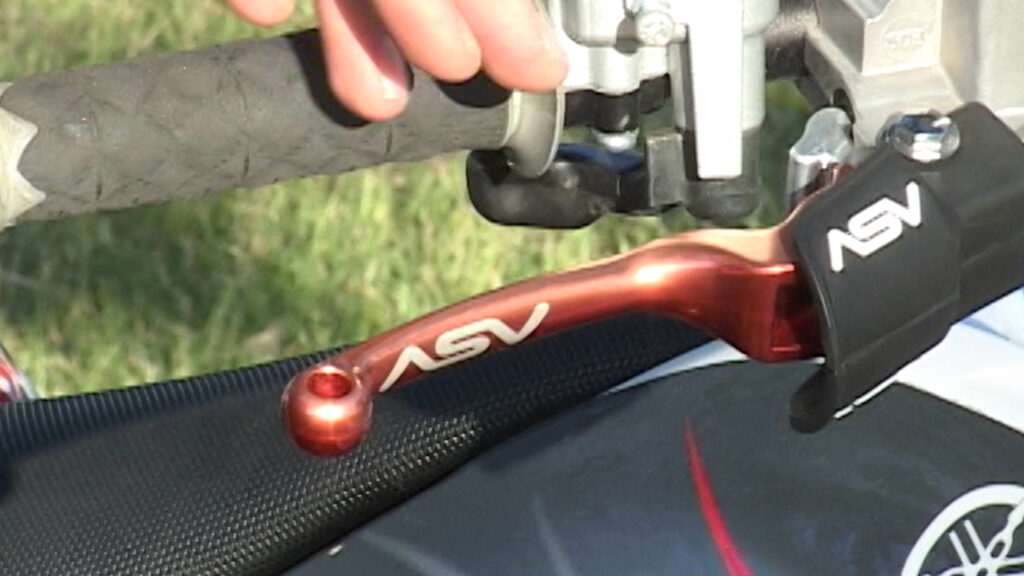
Knowles went with ASV levers for a couple of reasons — they can’t be broken, they’ll flip over backwards, and there’s an Allen bolt right there so you can adjust them for different hand sizes. A little pricey, he admitted, but worth it. Streamline stainless brake lines for positive braking. Universal bars — been around for years, light, with the right bend for this bike. And Spider grips, which he really liked: soft in the palm, tough on the ends, they don’t tear off when you roll your hands, they last, and they work as well in the water as anywhere else.
Tires and Wheels
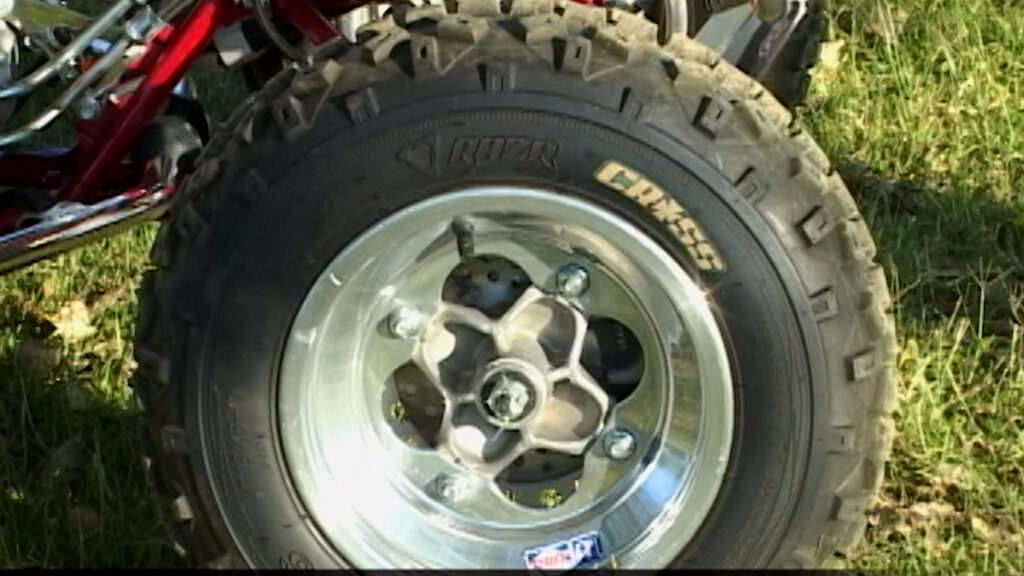
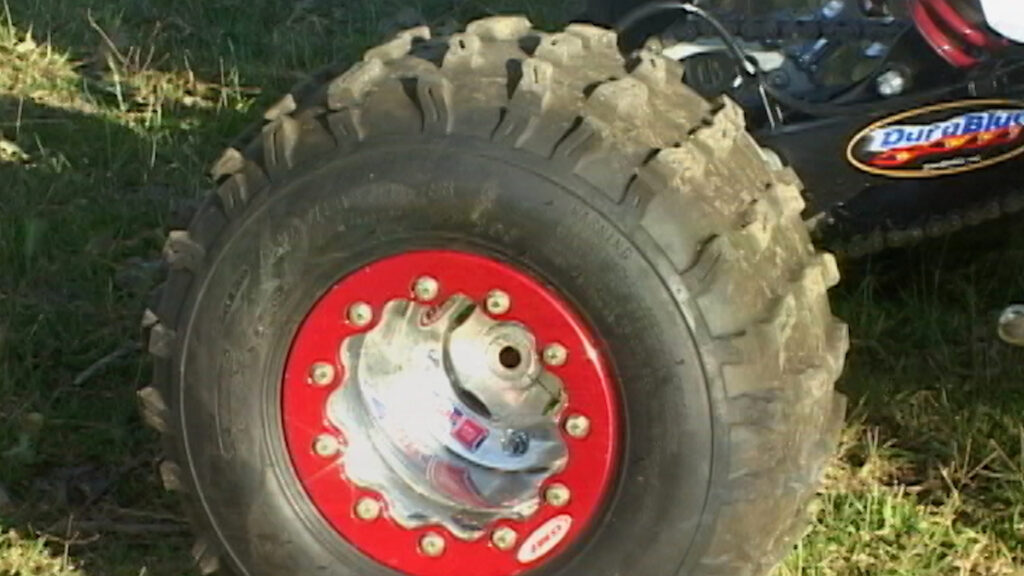
Weight was the filter for everything rolling, too. Knowles went with Maxxis Razr Cross tires up front — nineteen-inch, chosen because they wanted a light tire on a bike that isn’t big. They work well on both hard-pack and soft-pack track. Out back, a narrow Maxxis just eight inches wide, same reason: on a motor with not a lot of horsepower, you have to be careful with rotating mass.
The Motor
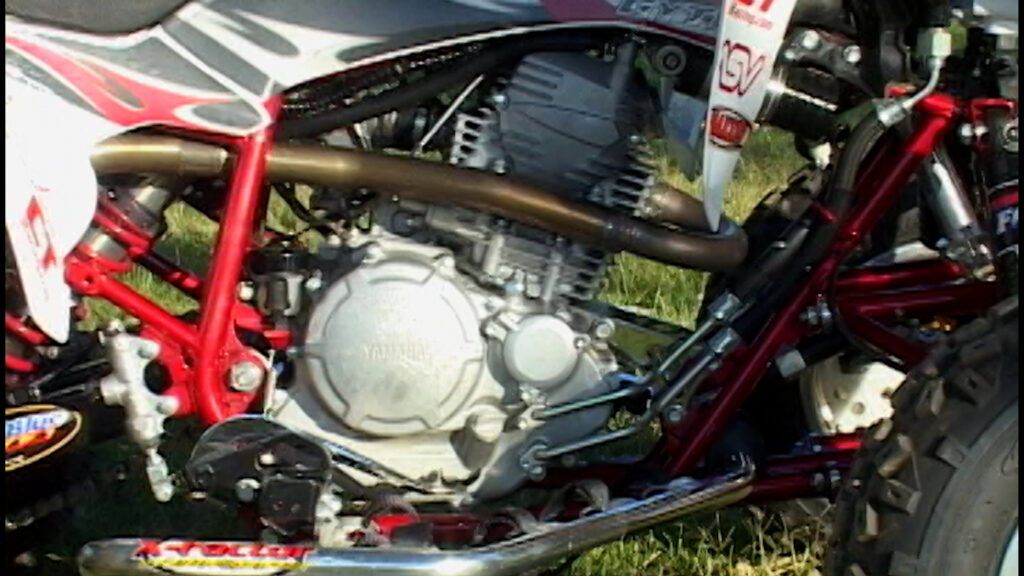
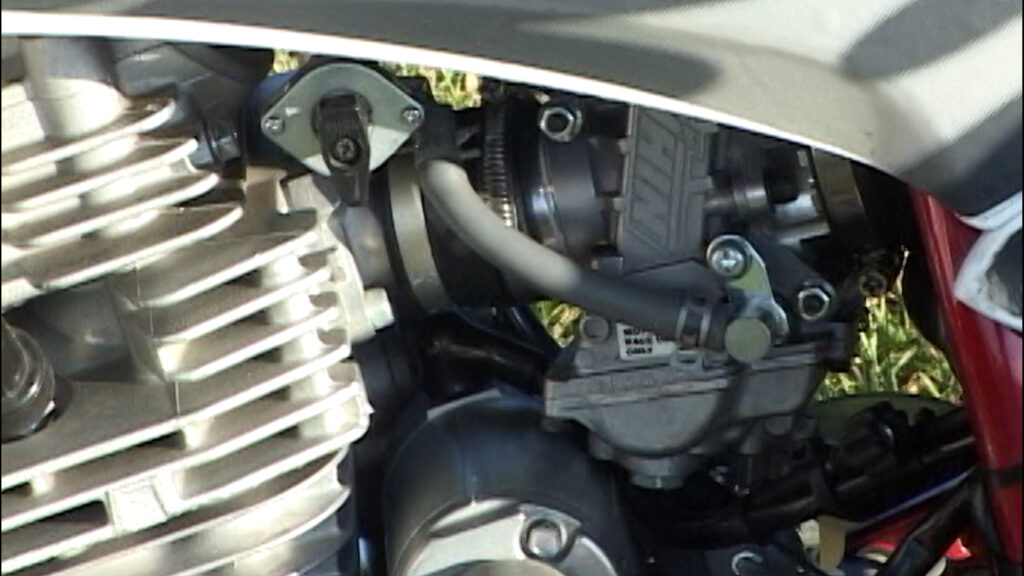
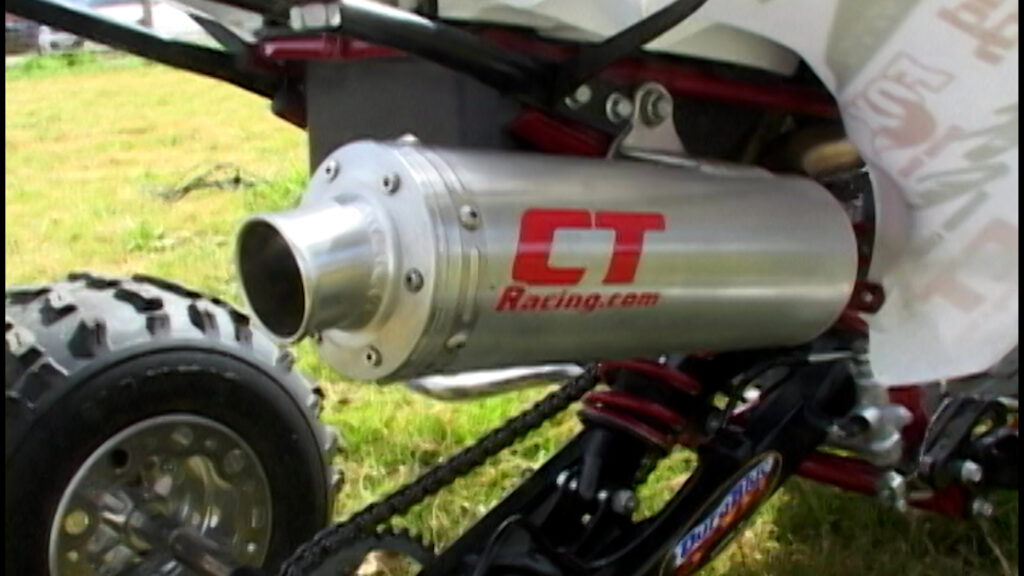
Knowles said this is the part of the package he liked talking about most. CT Racing did a lot of flow-bench testing on the head. The stock head has valve guides that protrude way down into the flow path, so they pulled those up and installed much shorter guides, which really picked up the flow numbers alongside significant porting. They also did extensive cam testing with Web Cam — and they’re pushing thirty horsepower with this thing. They developed a CT pipe for it, had to build a second version once the power came up, because they needed a bigger head pipe. They normally use a disc system on their pipes but went away from it here to keep weight down. The piston is a JE high-compression unit running thirteen-to-one. Carburetion is a thirty-three millimeter FCR Keihin — expensive, but it works extremely well and it’s one of the few carbs that actually fits the bike, since the way the tank is positioned, most conventional carbs with the cable poking straight up hit the gas tank. Crisp, snappy, making the big horsepower. They went with a K&N filter to get everything they could out of it.
Finishing Touches
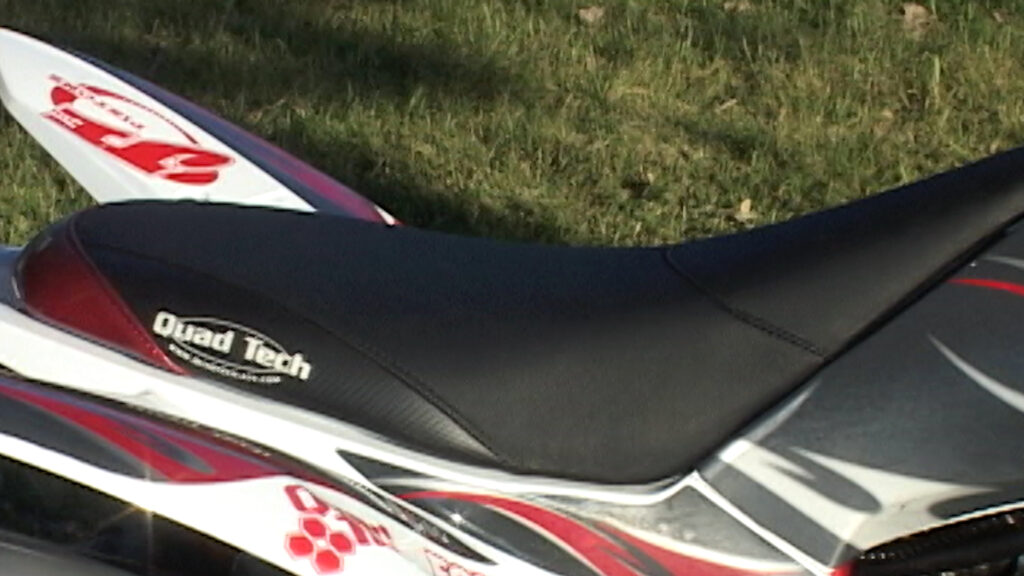
Billy Pointer from Quadtech built the seat, and he’ll do pretty much any color combination you want — bass-boat red metal flake, blue metal flake, all the contemporary colors. RSI supplied the billet covers for a little bling factor. A lot of the stuff on this bike was just tricked out. They kept the stock motor mounts — nothing wrong with those. The stock swingarm got powdercoated just for looks; they didn’t extend it. Knowles said a lot of guys build longer swingarms but they couldn’t figure out a reason to — lengthening it tends to spin the tires, and this bike isn’t particularly wheelie-prone, so stretching it would just be wasted money.
Conclusion
During the several days spent with this project ATV, they saw many 450s gunned down by the little Raptor 250. In conclusion, CT Racing’s Raptor 250 project would provide the ultimate platform for the lightweight production A-class racer or for an adult looking for a sleeper quad he can sneak out to the track and pounce.