
Published on December 5th, 2025 | by Joe
2026 Denago Daytona 250FI Test Review: WITH VIDEO
2026 Denago 250 FI Test Ratings
Summary: The Denago Daytona 250FI delivers plenty of fun and overall value—enough to put a smile on the face of any new sport ATV enthusiast at a price that’s tough to beat. If you have a local dealer you trust, the Daytona 250FI is worth checking out, especially for beginner-level riders looking for an approachable way to get into sport ATVs.
2.8
3 Month Test
An Affordable Beginner Sport ATV!
What made sport ATVs so great in the past was their balance of fun, reliability, and affordability. Today, while you can still find fun and reliable machines, true sport ATVs, especially affordable ones have become much harder to come by.
Denago Powersports is an American-based company leveraging global manufacturing to bring affordably priced powersports vehicles to American consumers. The company partners with Zhejiang TaoTao Vehicles in China, taking advantage of their modern production facilities to build machines to Denago’s specifications for the U.S. market.
One machine that caught our attention is the Daytona 250FI sport ATV. New for the 2025 model year and recommended for riders 16 and up, its $2,699 price tag is reminiscent of the late 1980s when the sport ATV segment was thriving. One common problem with smaller brands has been a lack of parts availability. Denago tells us they have a 700,000-square-foot parts warehouse centrally located near Dallas, Texas, stocked with everything needed to maintain their machines. Parts are available quickly, which is a big plus. Additionally, the Daytona and other models are covered by a six-month parts and labor warranty—similar to the big brands.
With all of this taken into consideration, when Denago asked if we’d be interested in testing the new Daytona 250FI, we decided to take them up on their offer.












Trim Packages
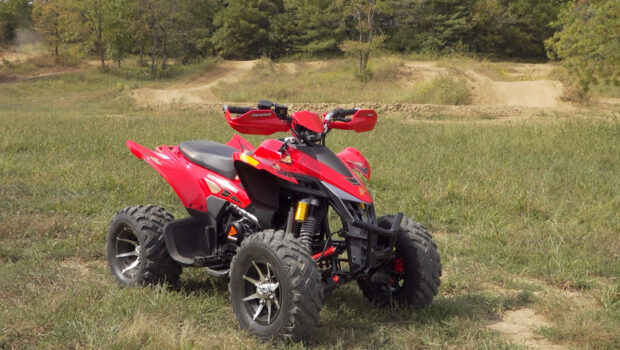
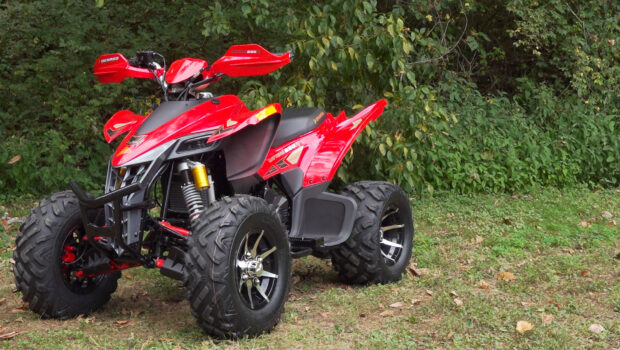
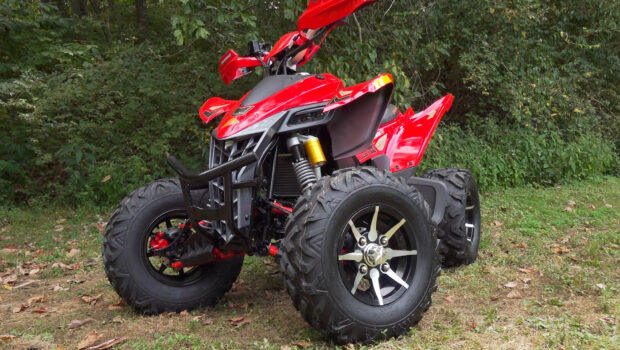
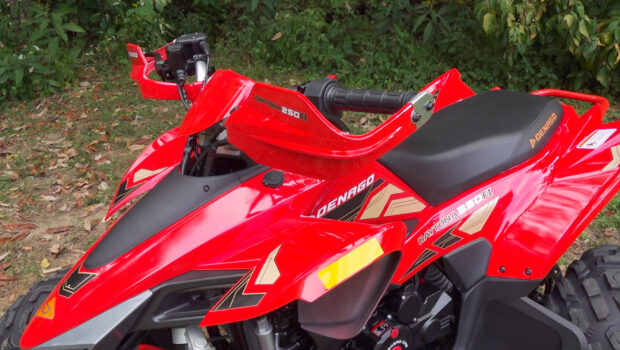
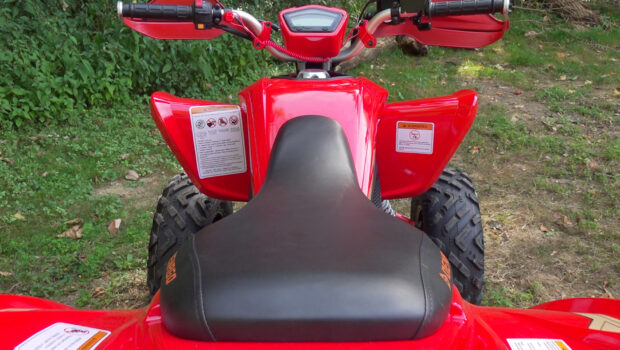
Keeping things simple, Denago offers one trim package for the Daytona 250. Utilizing painted plastic, the Daytona is available in five different colors, with five or more color options across Denago’s lineup. MSRP for the Daytona 250FI is an attractive $2,699—affordable, yet not cheap enough to be considered disposable. Is it worth it? Watch on and find out.
Rider and Location
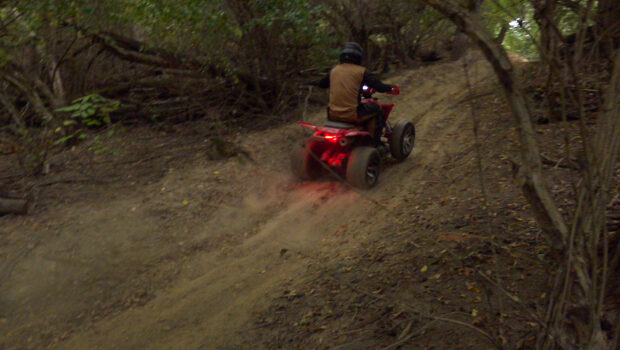
Riding the Denago was yours truly, standing 6 feet tall and weighing 200 pounds. Testing took place on the cross-country racecourse at Eastfork MX and on some private hilly trails in southeast Indiana.
Engine Performance
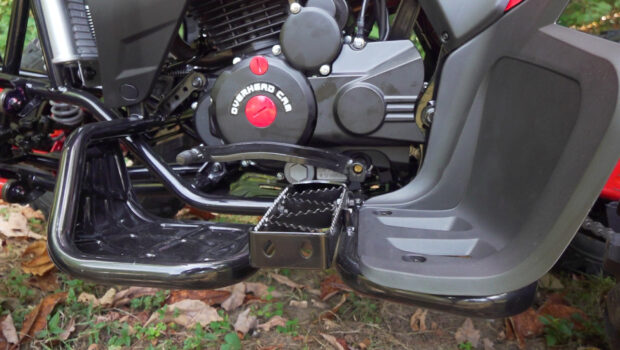
The Daytona 250 is powered by an air-cooled, two-valve, single-overhead-cam, four-stroke engine with a remote oil cooler to help keep temperatures in check. Fuel injection ensures the engine runs more reliably on today’s ethanol-blended pump gas, which can quickly gum up carburetors. The 1.3-gallon metal tank is a bit small, but the 250 didn’t seem overly thirsty during our trail testing.
Air is drawn from an airbox located under the seat. Unfortunately, accessing the filter for maintenance is highly inconvenient—you must remove the battery and rear fenders to access the screws to remove the side of the box or remove the entire box from the machine. This design needs to be reworked.
Electric start fires the engine quickly, even after sitting for a few weeks. It takes slightly longer to start when hot. You must pull in the brake lever to start the Daytona, but it will start in gear with the clutch out—an odd safety setup. A factory-installed tether kill switch is a welcome safety feature. The chrome steel exhaust with a short silencer emits a throaty, somewhat loud tone. The racer in us loves it, though the neighbors might not.
Out on the trail, the engine is surprisingly capable. Low-end power is plentiful for a small 250, making it great for technical trails or casual cruising. It also helps beginners learning to manage a manual clutch. As RPMs climb, the 250FI delivers a respectable midrange and top-end power. We found ourselves ripping up long climbs at higher RPMs to ensure success, although the engine was happy to lug a gear higher thanks to the well-tuned EFI. Overall, the fun factor is solid—it pulls hard enough out of turns to kick the rear end loose when traction is low.
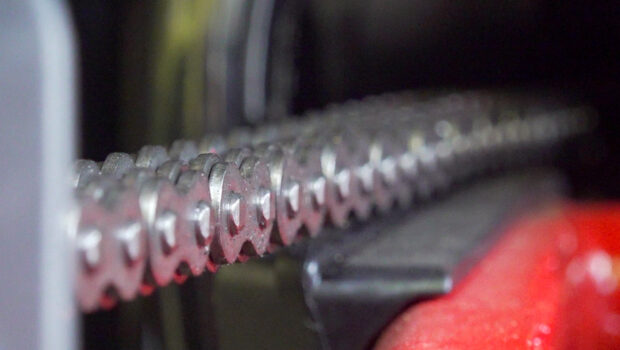
The engine is paired with a fully manual four-speed transmission with reverse. First gear is shifted up from neutral, with reverse one shift down. Fortunately, you can’t shift into reverse while moving forward (we didn’t try to force it). Shifting into first was difficult if the engine wasn’t at idle. Final drive is handled by a non-O-ring chain—acceptable on a small-bore machine for its lower friction and efficiency.
Clutch pull is light. While we typically prefer five gears, the Daytona’s broad powerband and well-spaced four-speed gearbox worked surprisingly well. First is low enough for tight trails and easy takeoffs, while the gaps between second, third, and fourth are even, providing plenty of top speed for the machine’s size suspension and handling. A throttle-limiting screw is equipped for beginners. We would, however, like to see lower gearing in reverse to make backing out of tight spots easier. The clutch exhibits a bit of chatter when hot, and the gearbox doesn’t like to shift under power.
Overall, the engine is a strong point on the Denago 250FI.
Suspension and Handling
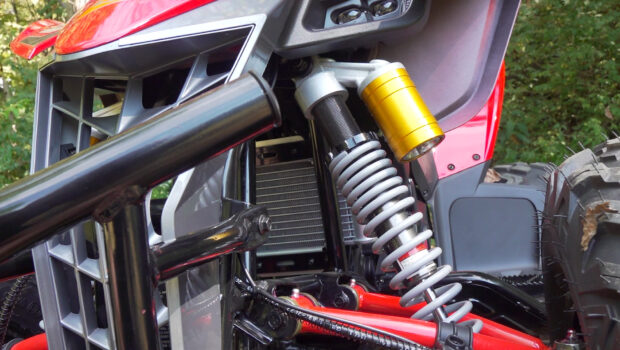
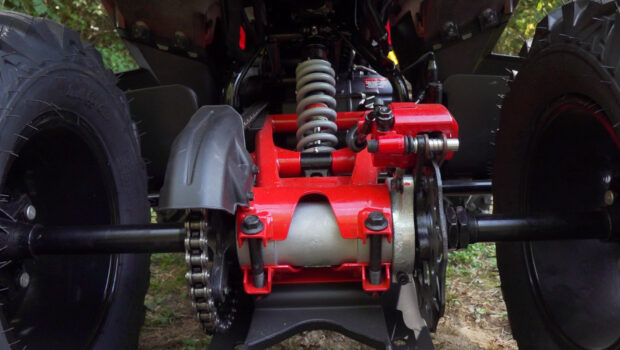
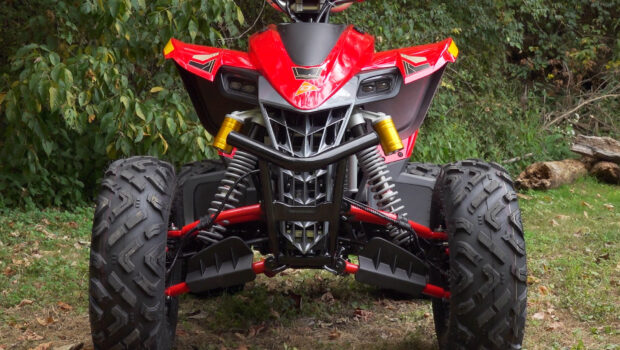
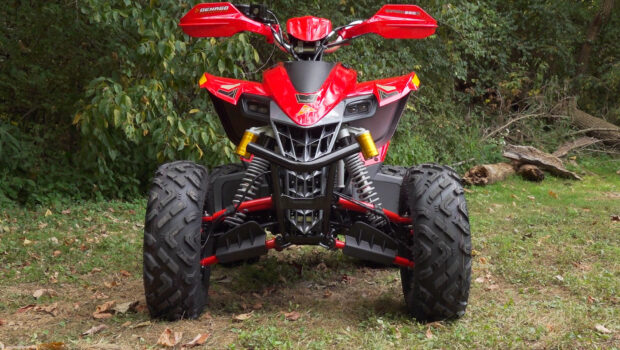
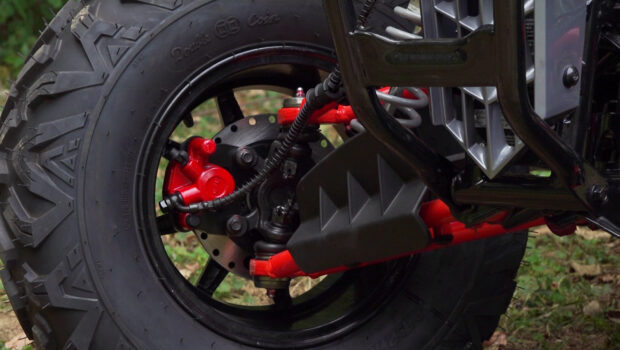
The Daytona 250FI features a tubular steel chassis with dual A-arm front suspension. The lower A-arms have two mounting holes for the shock eyelets, allowing minor adjustments to ride height and firmness. Out back, a swingarm and solid rear axle are paired with a no-link suspension setup. Plastic guards protect the front of the lower A-arms and axle carrier area on the swingarm, though the frame lacks protection.
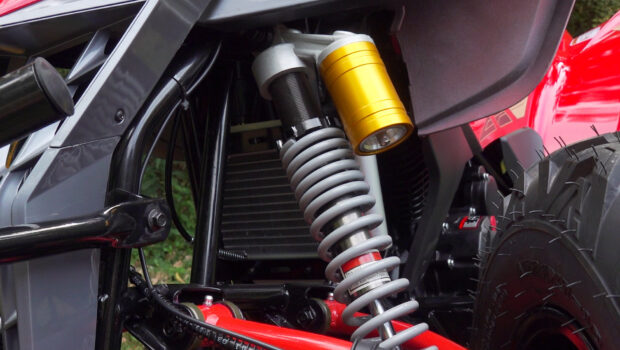
The chassis includes Zerk fittings for easy lubrication and a simple round-housing style chain adjustment system. The front shocks feature piggyback reservoirs claimed to contain nitrogen—impressive at this price point. The rear shock lacks a reservoir, which is odd since it handles more of the workload with less airflow and would benefit from additional cooling. All shocks feature threaded preload adjustment.
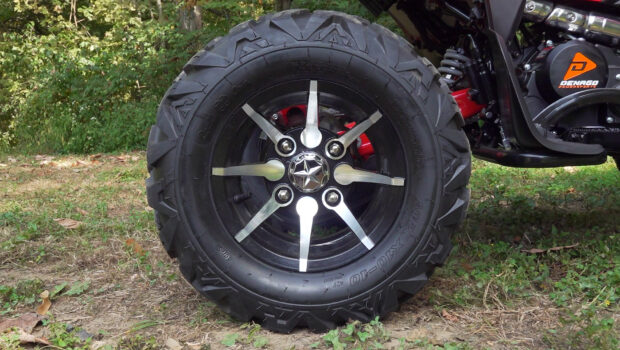
The tires and wheels appear better suited for a small utility machine. Simple spun-aluminum wheels would be lighter than the current mag-style, cast-aluminum setup, and the tires could use a more open, sport-oriented tread pattern. Their sizes—21×7-10 front and 20×10-10 rear—are pretty appropriate for a sport ATV.
The Daytona measures 39.3 inches wide with a 42-inch wheelbase, 28.7-inch seat height, 5 inches of ground clearance, and a dry weight of 396 pounds. Its closest competitor, the Honda TRX250X, measures 42 inches wide with a 44.3-inch wheelbase, 31.4-inch seat height, 5.7 inches of ground clearance, and a curb weight of 385 pounds. We’d like the Denago to be slightly larger overall, given its weight and 16+ age recommendation.
Suspension performance doesn’t match the engine. The shocks are overdamped, resulting in a harsh ride over small to medium bumps. While they didn’t bottom out on larger hits, we would gladly trade some bottoming resistance for a more compliant ride elsewhere. Without a reservoir and being overdamped, the rear shock faded severely during testing—which ironically made it perform better. After cooling, it returned to its stiff behavior. These shocks are better than a rigid chassis but need serious revalving. Spring preload and front shock position changes make minimal difference. More adjustments aren’t the answer—proper damping and spring rates are.
Steering effort is slightly heavy, but the Daytona tracks predictably. Its low seat height and firm suspension keep it planted. It remains stable on climbs, descents, and turns. A bit more width and wheelbase would improve overall confidence, but handling remains manageable on the trail.
The chunky tires provide ample grip and don’t noticeably hinder performance, though a lighter, more sport-focused setup would improve acceleration and ride quality.
Brakes
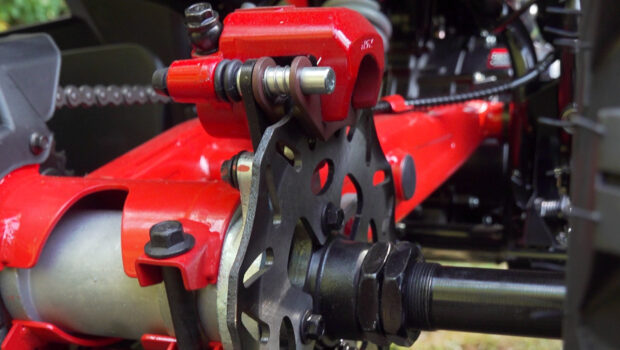
The Daytona 250FI uses dual hydraulic front discs and a single hydraulic rear disc, which are operated separately—exactly what we expect on a true sport ATV. Rear braking performance and feel are both good. The front brakes work adequately but feel slightly softer; a quick bleeding at the dealership would likely firm things up.
Ergonomics and Other Details
For a six-foot tall rider, the Daytona 250 offers just enough room for casual riding. When the trail gets rough and body movement becomes necessary, the ergonomics feel cramped. The machine will likely fit riders 5’6″ and under best.
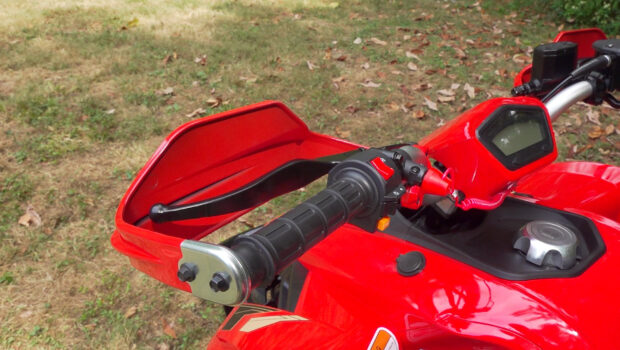
The handlebar height and bend are comfortable, as are the large steel footpegs. Plastic heelguards are typical. The steel nerf bars may add safety but will collect mud wet conditions. In riding boots, we had little issue operating the controls. However, the clutch and brake levers are poorly shaped, requiring four finger operation instead of two—a drawback in rough terrain. The wraparound handguards are a nice touch as is the bright digital instrument display.
The seat is long, relatively flat, and easy to move around on. Heavier riders may notice the front seat hook popping loose, and our seat corer tore cover early on. Thicker vinyl would be an improvement.
The switch layout is confusing—what’s typically the light switch controls power on and off, and what’s typically the power switch controls the lights. It’s the opposite of every sport ATV we’ve ridden. Not a dealbreaker, but worth mentioning. LED lights are found at both ends, though the front beams are weak for serious nighttime trail riding.
Denago’s painted plastics enable color variety but lack the resilience of color impregnated plastic. Minor overspray is visible on the unpainted underside, though not overly concerning.
Conclusion
The Daytona 250FI isn’t the Raptor 250 replacement we’ve been dreaming of, but for half the price of a Honda TRX250X, you get far more than half the machine. We rode the little Denago hard for several days with no breakage to report. Strong engine performance, decent handling, and capable brakes are its highlights. Some suspension refinement and a few design tweaks would go a long way toward elevating its sport ATV status.
As it stands, the Denago Daytona 250FI delivers plenty of fun and overall value—enough to put a smile on the face of any new sport ATV enthusiast at a price that’s tough to beat. If you have a local dealer you trust, the Daytona 250FI is worth checking out, especially for beginner-level riders looking for an approachable way to get into sport ATVs.
Learn more about the Denago Daytona 250FI and Denago’s full ATV lineup at www.denagomotorsports.com.

Related Posts

2024 Yamaha Raptor 700R GNCC Race Test Review →

2024 Yamaha Raptor 700R Test Review →

HMF YFZ450R Cross-country Racer Project Test Review →