
Best Used Sport ATVs from $1,500 to $5,000
If you’re searching for the best used sport ATVs to buy in 2026, you have some fantastic options to consider. With most major manufacturers stepping away from the full-size sport ATV market for over a decade, your options for new sport quads are still limited—but not quite as narrow as they once were. Today, there are essentially four choices: the Honda TRX250X, Yamaha’s YFZ450R, the Yamaha Raptor 700R, and the newer Kayo Storm 300, which adds a more affordable mid-size option to the lineup.
The TRX250X is designed for beginners and offers limited performance upgrades due to its pushrod engine and shaft drive. The YFZ450R caters to racers and riders seeking top-tier performance and handling. Meanwhile, the Raptor 700R strikes an ideal balance of power, comfort, and versatility for serious sport riders. The Kayo Storm 300 has received some early positive attention, but we still need to spend time with one ourselves and see how long-term durability, parts availability, and aftermarket support shake out. Check out that test coming soon.
Compared to side-by-sides or even high-end mountain bikes, a $10,000 Yamaha sport ATV does not seem unreasonable—if you have the money and can find one in stock. However, the TRX250X now costs over $5,000, putting it in direct competition with many used sport ATVs that offer significantly more performance and upgrade potential.
With rising prices and limited availability of new machines, we reached out to respected companies in the sport ATV aftermarket, along with experienced sport ATV enthusiasts, to identify the best used sport ATVs for recreational riders with $5,000 or less to spend. Our criteria included availability, performance per dollar, aftermarket support, OEM parts availability, used parts availability, production volume, and how well each machine still fits today’s riders.
As a true sport ATV buyer’s guide, every machine on this list features a manual-shift gearbox, two-wheel drive, and chain drive. Drawing from decades of riding experience and industry feedback, here are our top five used sport ATV buys for 2026.
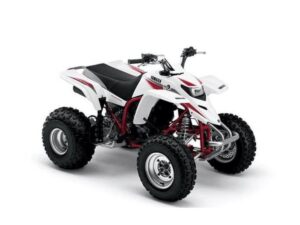
#5 Yamaha Blaster 200
Best For
Beginner to intermediate riders, smaller riders, Youth Racing, budget builds, two-stroke fans
Why It Belongs on the List
The Yamaha Blaster entered the market as a 1988 model and remained in production through 2006, making it one of the longest-running entry-level sport ATVs ever built. Although it is powered by a two-stroke engine, it was not designed as a high-performance machine like the Yamaha Banshee. The Blaster was built as a budget-friendly recreational sport quad at a time when the class was mostly filled with four-strokes, including Yamaha’s own Warrior 350.
Its air-cooled 195cc two-stroke engine focuses most of its stock power in the low-end and midrange, making it easy to ride for beginners and fun to play with for more experienced riders. A six-speed transmission helps keep the engine in the meat of the power. Its compact chassis, light weight, and 7.1 inches of suspension travel at both ends make it easy to throw around on tight trails, although the stock suspension can feel harsh and the short wheelbase is less confidence-inspiring in whoops or higher-speed terrain.
Like most two-strokes, the Blaster responds extremely well to engine modifications. It also responds well to suspension upgrades. Fully built versions can remain nearly as light and agile feeling as stock when done correctly, making it a great platform for riders who want to grow into a more capable machine.
Model-year changes were limited, which is good news for used buyers. The biggest update came in 2003, when Yamaha updated the styling and switched to hydraulic disc brakes, providing stronger, more reliable stopping power with less maintenance than the earlier mechanical brake setup.
What to Watch For
- Stock suspension can be harsh
- Compact size limits bigger riders and high-speed comfort
- 2002 and older models have weaker, higher-maintenance brakes
- Look closely at frame condition, axle bearings, swingarm bearings, and signs of abuse
Parts & Availability
The Blaster’s long production run, simple design, and strong enthusiast following make it one of the easier old sport ATVs to keep alive. New and used replacement parts are widely available, and the aftermarket still supports common performance upgrades.
Clean Used Pricing
Typical range: $1,500–$2,500
ATV On Demand Take
Affordable, reliable, upgradeable, and available, the Blaster is one of the most fun sport ATVs you can buy at any budget. It is best suited to smaller beginner and intermediate riders, but bigger riders can still have a blast on one. We cannot think of many ways to have more fun for less money on four wheels.
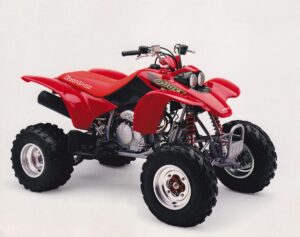
#4 Honda TRX400EX / TRX400X
Best For
Recreational riders, trail riding, beginner or vet class XC racing, all-around use
Why It Belongs on the List
Honda’s TRX400EX was the ATV that reignited the sport and high-performance ATV segment for the masses when it arrived as a 1999 model. It was quickly surpassed as the top choice for high-level racers by the faster four-strokes that followed, but it lived on as one of the most well-rounded sport ATVs ever produced, eventually continuing as the TRX400X.
The 397cc air-cooled four-stroke engine is mated to a five-speed gearbox. It does not have the nervous, high-strung feel of a modern 450. Power is available right off idle and pulls hard through the midrange, making it forgiving for newer riders while still having enough performance for experienced riders to have fun.
The early models had a claimed 375-pound dry weight and remained relatively light for a four-stroke of this size. At 45.3 inches wide with a 48.4-inch wheelbase, the 400EX feels agile and easy to place on the trail. Suspension travel is 8.2 inches up front and 9.1 inches out back, with preload-adjustable front shocks and a fully adjustable rear shock. In stock trim, it is best suited to spirited trail riding, light track use, and occasional cross-country racing. Handling is light and agile, the suspension is surprisingly plush for a sport ATV, and braking performance is typically Honda: excellent.
Model-year updates are worth noting. In 2005, Honda updated the bodywork to resemble the TRX450R, revised the forward gear ratios, and added reverse. In 2008, the machine was restyled again with a look inspired by the 700XX and a slightly narrower forward seat section. The suspension was also softened that year to better match its trail-riding role, which may not benefit heavier or more aggressive riders. In 2009, the name changed to TRX400X.
What to Watch For
- Some OEM parts are becoming harder to find
- Big bore kits, especially when improperly installed, can lead to head stud issues
- Bent subframes are common
- Check bearings, frame condition, and maintenance history
Parts & Availability
Aftermarket support is not quite what it once was, but there are still enough companies supplying replacement and performance parts to build anything from a mild trail machine to a much more serious setup. Because Honda sold so many 400EXs over such a long period, used parts availability remains one of its biggest strengths, even as some OEM parts become harder to get.
Clean Used Pricing
Typical range: $2,500–$4,000
ATV On Demand Take
The 400EX is a well-rounded, dependable sport ATV that still holds up today. It is a great choice for riders who want real sport ATV performance without the intensity, maintenance demands, or race-focused feel of a 450. With routine maintenance, it is rock-solid reliable.
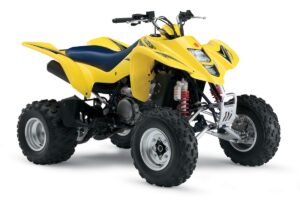
#3 Suzuki QuadSport Z400 / Kawasaki KFX400 / Arctic Cat DVX 400
Best For
Recreational riders, trail riding, beginner or vet class XC racing, all-around use
Why It Belongs on the List
Originally a Suzuki model and later sold under the Kawasaki and Arctic Cat brands, the Suzuki QuadSport Z400 arrived in 2003. The Suzuki-based 400s are very similar in purpose and feel to the Honda 400EX, but with slightly better performance in stock trim and more engine potential once modifications are added. The more you build the motor, the more the difference begins to show.
Its 398cc four-stroke engine produces strong, smooth low-end and midrange power, and the five-speed transmission included reverse from the start. At 45.9 inches wide with a 49-inch wheelbase, 8.5 inches of front suspension travel, and 9.1 inches of rear travel, its dimensions and suspension numbers are right in line with the 400EX. Chassis-to-chassis, they are not wildly different. If anything, the Honda may have the edge in simplicity and chain adjustment, while the Suzuki offers a little more engine performance and responds very well to modifications.
In 2005, Suzuki made the Z400 much more attractive by adding fully adjustable, rebuildable, reservoir-equipped front shocks. This made a noticeable difference in suspension performance, especially for riders who take time to dial in the shocks. Suzuki also strengthened weak points in the chassis and updated the engine with revised intake and exhaust cams, a 37mm carburetor with TPS, and an extra plate in the clutch basket.
In 2009, Suzuki restyled the Z400 to look more like the LT-R450, switched from carburetion to fuel injection, widened the machine by about an inch, and updated the suspension with firmer settings. The 2009-and-newer Suzuki models are the fuel-injected ones; the Kawasaki KFX400 and Arctic Cat DVX 400 did not receive fuel injection.
What to Watch For
- Early models are more worth inspecting for frame or shock-mount cracks
- Chain adjustment is not as simple as Honda’s 400EX setup
- 2009-and-newer Suzuki models have firmer suspension than earlier versions
- Kawasaki and Arctic Cat versions are carbureted only
- Verify that parts match the exact brand/model/year when buying plastics, graphics, or model-specific components
Parts & Availability
The 2003–2008 carbureted models have the strongest aftermarket support, and we would generally look for a 2005-or-newer machine because of the suspension, chassis, and engine updates. Suzuki still has a decent amount of factory parts support, and there is still a good supply of aftermarket and used parts. The Kawasaki and Arctic Cat versions share much of the same platform, which helps availability, though brand-specific plastics and trim can vary.
Clean Used Pricing
Typical range: $3,000–$3,500 for clean examples, with many still found under $5,000
ATV On Demand Take
The Z400, KFX400, and DVX 400 are underrated. They are a better choice than a 450 for many recreational riders, offering a strong balance of trail comfort, usable performance, reverse, reliability, and modification potential. Think of them as 400EX competitors with a little more motor potential when you start adding parts.
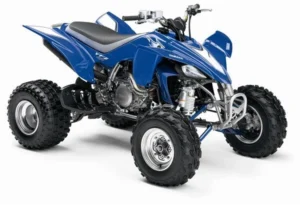
#2 Yamaha YFZ450
Best For
Aggressive riders, motocross, XC racing, dunes, high-performance builds
Why It Belongs on the List
Yamaha was first to market with a 450cc high-performance ATV when the 2004 YFZ450 arrived in late 2003. It remains one of the fastest, hardest-hitting 450cc four-strokes ever produced, with power delivery that feels like it was designed to mimic a two-stroke. When Honda’s TRX450R arrived soon after, it took motor builders a little time before the Honda could consistently keep pace with the Yamaha.
The five-valve, liquid-cooled 450-class engine is jittery off the bottom, hits hard in the midrange, and loves to rev. Basic modifications—exhaust, intake/airbox changes, proper jetting, and cam timing changes—wake the YFZ up dramatically and make it even harder hitting. With racing as the priority, reverse was left out of the five-speed transmission.
At 46.1 inches wide with a 50.4-inch wheelbase, a low seat height, and a light claimed dry weight, the YFZ feels stable enough for motocross while still being narrow enough for trail use. Fully adjustable shocks control 9.1 inches of front travel and 10.1 inches of rear travel. In stock trim, the suspension is firm and better suited to track use than casual trail riding, with good bottoming resistance for jumping. Braking power is excellent.
The YFZ’s racing pedigree includes GNCC championships, and it can be built into a serious race machine. In nearly stock form, it is stiff, fast, and happiest when pushed hard. Ergonomics are compact, and the seat is firm, making it less comfortable on long rides and less roomy for some taller riders.
Yamaha made a number of updates in 2006 that significantly improved engine durability while slightly improving overall performance. The carbureted YFZ450 continued through 2009. Yamaha later brought the non-R YFZ450 back in 2012 as a more budget-friendly 450 option, but it lost some of the earlier premium parts, including the FCR carburetor and adjustable shocks. It was a little smoother and more forgiving to ride but lost some hop-up potential without the FCR carburetor.
What to Watch For
- No reverse
- More frequent oil changes than lower-performance sport quads
- Valve maintenance is important
- Keep the air filter clean
- Stock suspension is firm for casual trail riders
- 2006–2009 carbureted models are generally the preferred years for performance and durability
Parts & Availability
Aftermarket support remains strong for building a play, trail, MX, or XC machine. Yamaha still has good parts availability, which is a major reason the YFZ450 remains one of the smarter high-performance used buys.
Clean Used Pricing
Typical range: around $3,000 – $5,000 for a good carbureted YFZ450, with condition and year making a big difference
ATV On Demand Take
If you want raw four-stroke performance, the YFZ450 delivers. It is not the best choice for beginners or riders who want a relaxed trail machine, but for aggressive riders or anyone considering racing, it remains one of the most exciting sport ATVs ever built.
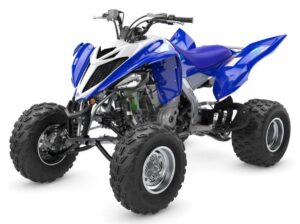
#1 Yamaha Raptor 700R
Best For
All-around sport riders, trail riding, dunes, taller riders, long rides
Why It Belongs on the List
The Yamaha Raptor 700R has been one of the best-selling sport ATVs nearly every year since its 2006 release, and for good reason. Its 686cc liquid-cooled four-stroke engine is near perfection for all types of sport ATV riding, delivering smooth, linear power that can make the most of traction or roast the tires coming out of corners. With that much torque on tap, the five-speed transmission with reverse spends a lot of trail time in third and fourth gear.
At 45.5 inches wide with a 50.4-inch wheelbase, the Raptor is more agile than its displacement suggests. Despite feeling taller than the other machines on this list, it remains planted in turns thanks in large part to well-tuned suspension that keeps the chassis controlled while still soaking up trail chop, bumps, and moderate jumps. Front and rear suspension travel is 9.1 and 10.1 inches, and the brakes came from the YFZ450, so stopping power is excellent.
A cautious newer rider can learn on a Raptor 700R, while experts are unlikely to get bored. Ergonomics work for a wide range of riders, but this is one of the best sport ATVs ever produced for riders over six feet tall. The taller seat height also makes it more comfortable and less fatiguing on long rides than many smaller, more compact sport quads.
Model-year updates matter. The 2006 models had basic front shocks with a fully adjustable rear shock. In 2008, Yamaha added fully adjustable front shocks to the R model along with a digital display. In 2013, the Raptor received more modern styling, along with minor braking, wheel, and tire updates, while the base Raptor 700 arrived without the R’s higher-end adjustable suspension. In 2015, the Raptor received a single exhaust-port cylinder head, a small performance increase, taller front tires, and minor suspension tuning changes.
What to Watch For
- 2006 models lack the better adjustable front shocks
- Base Raptor 700 models have simpler preload-adjustable shocks
- Confirm whether it is a true R model if suspension matters to you
- Check normal used-ATV wear items: bearings, chain/sprockets, brakes, tires, and air-filter maintenance
Parts & Availability
Because the Raptor 700R is still in production, OEM parts availability is excellent compared with most older sport ATVs. Aftermarket support is also massive, with options for engine builds, exhaust, fuel tuning, suspension, chassis parts, protection, ergonomics, and appearance upgrades.
Clean Used Pricing
Older, clean examples can still be found near the $5,000 target, but newer and lower-hour R models often bring more. For buyer-guide purposes, the best value is usually an older 2008-or-newer R model with adjustable, rebuildable shocks unless you already plan to upgrade the suspension.
ATV On Demand Take
New or used, the Raptor 700R is the sport ATV we recommend to more riders than any other machine. It is powerful, comfortable, reliable, versatile, and still supported by Yamaha and the aftermarket. Keep the oil and air filter clean, and it should last an extremely long time.
Final Thoughts
The best used sport ATV is not always the fastest one. It is the one that fits your size, riding style, budget, terrain, and maintenance expectations. For smaller riders and budget-minded two-stroke fans, the Blaster is still hard to beat. For all-around trail riding, the 400EX and Z400 families offer outstanding value, comfort, and reliability. For aggressive riders, the YFZ450 delivers race-level performance. For the widest range of serious sport riders, the Raptor 700R remains the benchmark.
With limited new sport ATV options available, the used market still offers some of the best performance-per-dollar in powersports—as long as you know what to look for before you buy.